


Confirming the Drinking Edge Before Production
The drinking edge is an important approval point for glass cups. Buyers need to check its profile, smoothness and consistency alongside the overall cup shape. A rim that looks acceptable in a photograph may still have uneven sections or small defects that require physical inspection.
Glasmero coordinates rim requirements with the relevant glassware manufacturing partner. We use the selected model, intended application and approved sample to establish what should be checked before an order proceeds. Requirements should reflect the actual glass rather than a general promise of a smooth finish.
Matching Rim Profiles to the Selected Glass
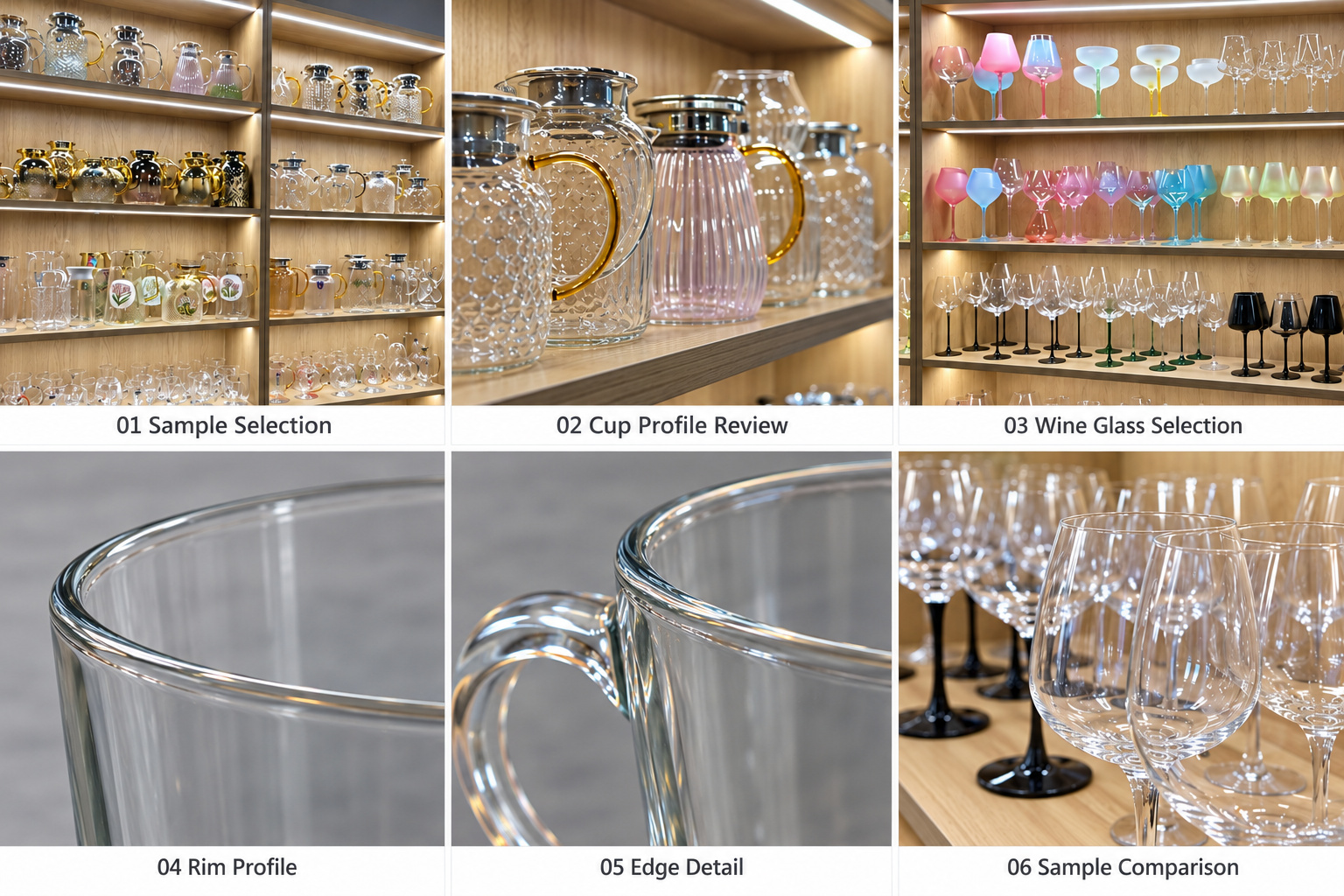
Beer glasses, everyday tumblers, handled mugs and wine glasses can have different rim constructions. Edge thickness, mouth diameter and the transition from the wall to the drinking surface influence the finished profile.
Buyers should provide a reference sample or clear drawing when a particular rim shape matters. Requests for a thinner edge, wider opening or different lip profile need a feasibility review. These changes may affect the existing tooling or production route and should not be treated as simple finishing adjustments.
 Reviewing the Applicable Finishing Method
Rim finishing depends on how the selected glass is formed. Where applicable, production may involve separating an unfinished top section, smoothing the edge or applying heat to finish the drinking surface. The actual sequence must be confirmed for the model; these operations do not apply equally to every cup.
Our glass forming and shaping information provides context for reviewing the proposed construction. Glasmero checks the applicable route with the producer before describing a particular finishing method as part of an order.
A polished appearance alone does not establish strength, thermal performance or suitability for a particular use.
Sample Approval and Measurable Requirements
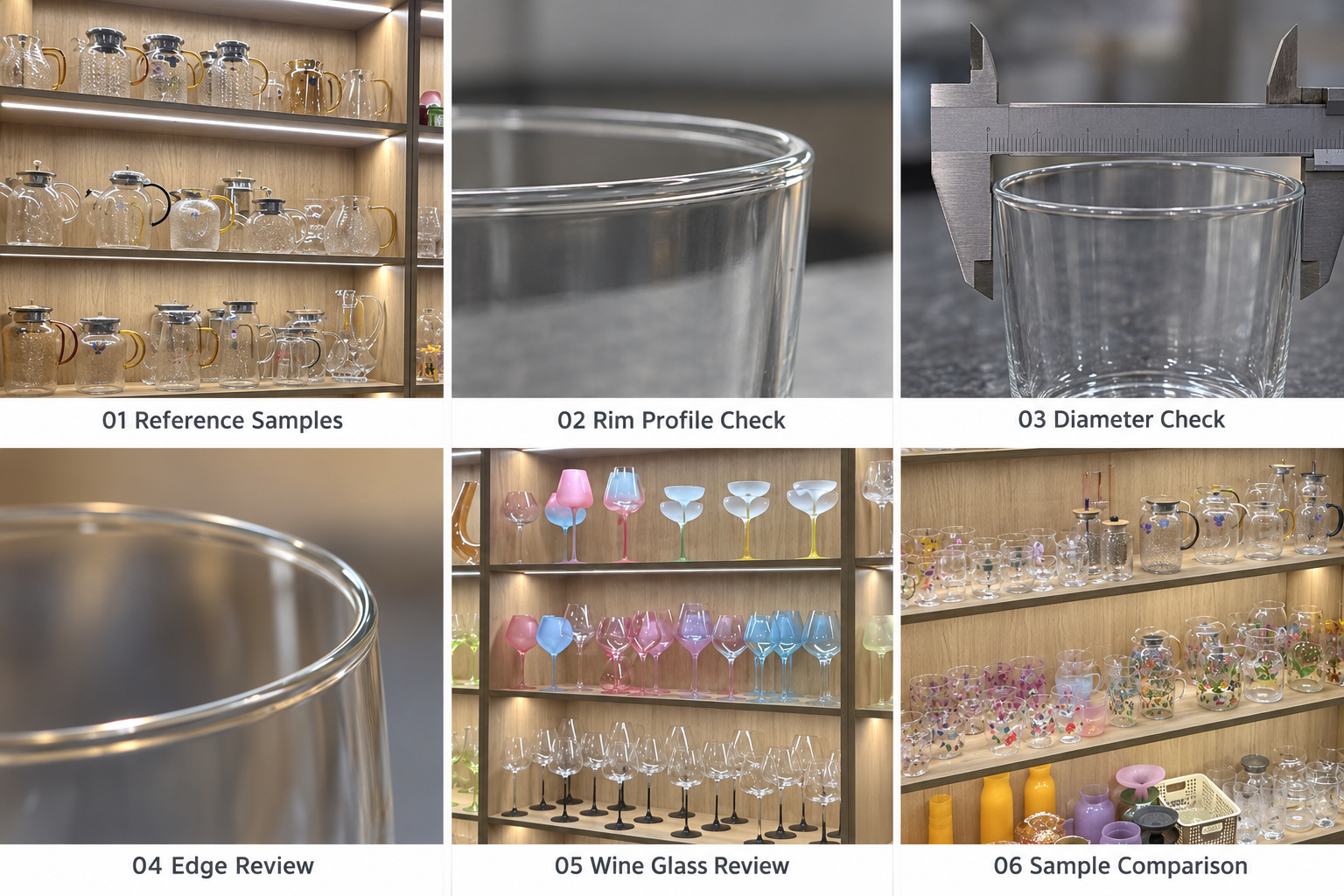
Physical samples should be reviewed for mouth diameter, rim thickness where relevant, edge continuity and visible distortion. Buyers should also confirm whether measurements refer to the inner or outer diameter.
The approved sample provides a reference for appearance and profile, while agreed tolerances define measurable acceptance requirements. If the rim changes during development, the revised sample should be approved before volume production. Our sample development process helps separate initial model selection from final production approval.
 Inspection Points for Finished Rims
Agreed checks may cover chips, cracks, sharp edges, uneven sections and visible irregularities around the mouth. Inspection should also consider whether the rim remains consistent with the approved profile.
An appearance check should not replace any separately required performance testing. The inspection scope, sampling approach and defect acceptance criteria need to be established for the order. Our glass cup quality inspection page explains how rim checks connect with other product requirements.
Packing, Scheduling and Quotation Details
Packing should limit contact between drinking edges during handling and transport. Dividers, individual protection and carton layout should suit the cup shape. Nested or stacked packing requires particular review because adjacent glasses may contact the rim.
Changes to rim specifications can affect sample work, production feasibility, rejection levels and scheduling. Send the glass reference, quantity, mouth dimensions, preferred edge profile and any inspection requirements. Glasmero will review the proposed finish, sample needs and packing arrangement before confirming quotation terms and an expected dispatch window.