


Match the Production Route to Your Cup
Glasmero coordinates glass cup projects with product-specific manufacturing partners for importers, distributors, hospitality suppliers and private label brands. This overview explains the production decisions buyers need to confirm before approving an order.
Our product scope includes drinking glasses, glass mugs, glass can cups, beer glasses, tea cups, shot glasses, whisky glasses and wine glasses. Each category can involve different materials, forming methods and finishing requirements.
Start with the intended application, target dimensions, capacity and order quantity. A reference photograph helps identify the proposed style, while a physical sample or dimensioned drawing provides a clearer basis for feasibility review.
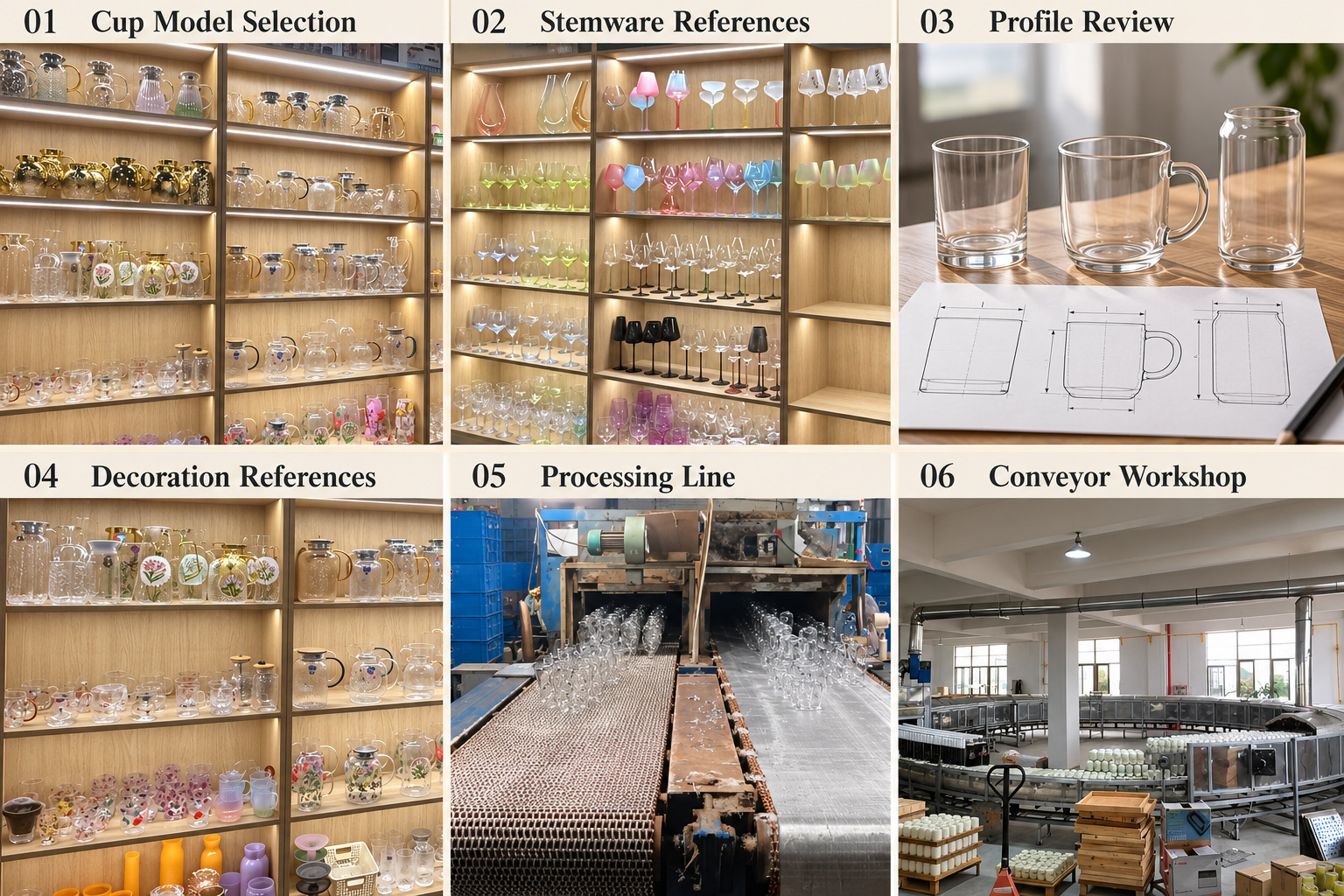 Confirm Material and Construction Together
Soda-lime and borosilicate options should be assessed alongside the selected model and structure. Material availability does not mean every shape can be produced through the same process.
For applicable furnace-based products, material preparation, melting and refining come before forming. Other products may start from prepared glass tubing. Handled, stemmed and double-wall designs introduce additional construction requirements.
Confirm the required use conditions separately. A material description alone does not establish resistance to temperature changes or suitability for dishwashers and microwaves. Our glass material options explain what buyers should specify during this review.
Understand Forming and Tooling Requirements
Depending on the product, forming may involve pressing, blowing or working from glass tubing. The manufacturing partner reviews the proposed design against the suitable route.
Existing models offer an established starting point. Changes to the profile, molded details or base may require tooling assessment and trial samples. Wall distribution, handle clearance and achievable tolerances also need consideration.
For a new design, identify the dimensions that are essential and those that can be adjusted. Our custom glass mold development page covers the information needed before tooling scope, costs and trial arrangements can be confirmed.
Review Finishing and Decoration on Physical Samples
Applicable cooling and annealing stages address stresses introduced during forming. Rim finishing, handle attachment and other component work depend on the selected construction.
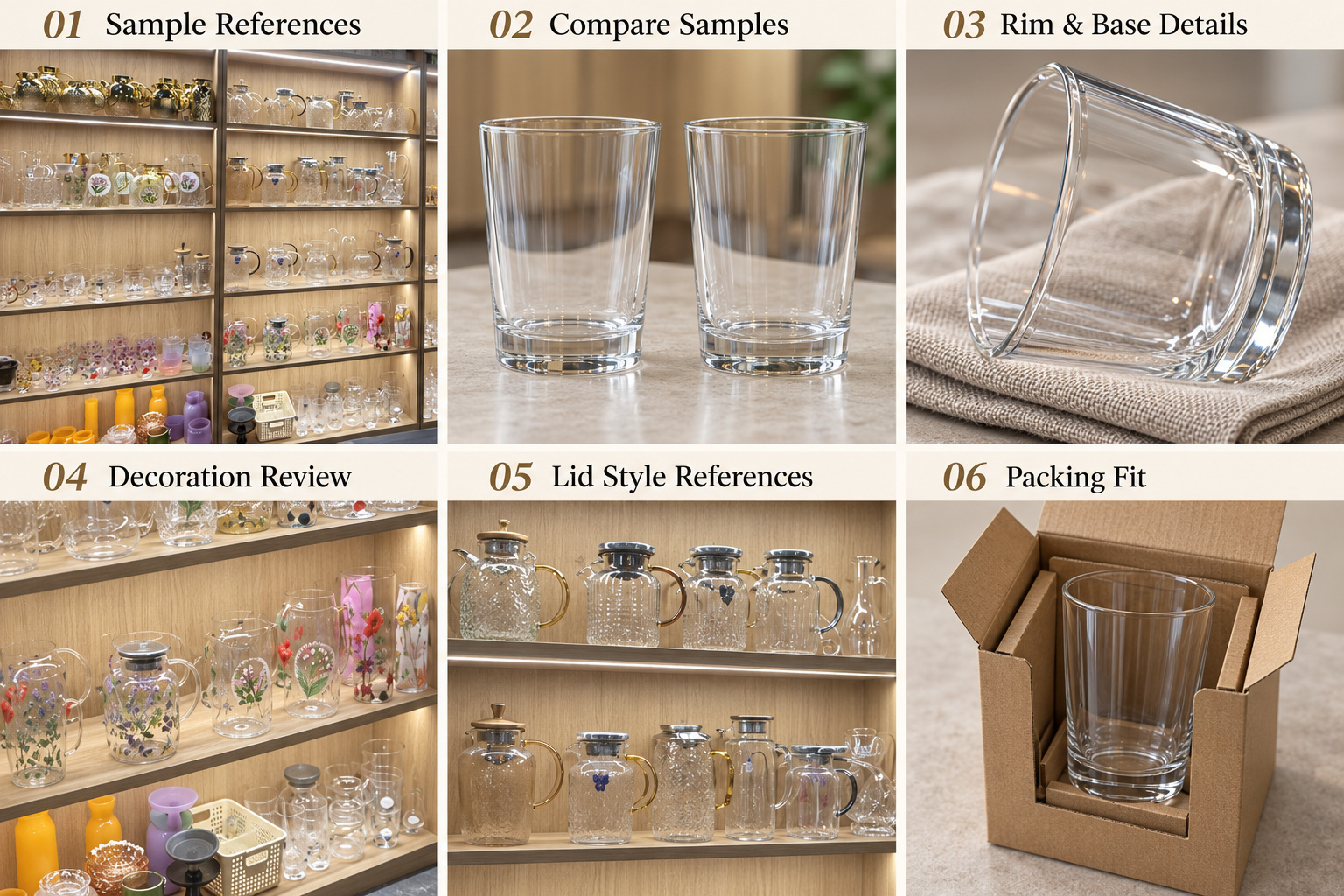
Buyers should review the drinking edge, base stability, handle clearance and accessory fit against agreed requirements. These details can affect usability and packaging dimensions.
Decoration needs its own approval reference. Confirm artwork size, position, colours and orientation on the chosen cup. A digital layout helps establish placement, but a physical decorated sample provides a clearer reference for appearance on curved or textured glass.
 Set Inspection and Packing Requirements Before Production
The approved specification should define dimensions, capacity measurement, appearance criteria, decoration and accessories. Inspection arrangements need an agreed sampling method and acceptance criteria.
Packing should be reviewed with the actual cup, especially for handles, stems and sets containing separate components. Confirm inner protection, box contents, carton quantities and shipping marks. Any requested transport testing or third-party inspection requires a separately agreed scope.
Request a Production Review and Quotation
Send your cup reference, material preference, quantity per model, decoration files, packaging requirements and destination. Include your required dispatch or arrival date.
MOQ and timing depend on model availability, tooling, decoration and packaging preparation. Sample approval and the agreed payment conditions should have a defined place in the schedule. Glasmero uses these confirmed details to coordinate quotation, production planning and shipment preparation with the relevant partners.