


Assembly Requirements for Glass Drinkware
Handles, lids and other components should be reviewed as part of the complete glassware specification. A cup body may match the requested capacity while its handle clearance, lid fit or accessory arrangement still requires adjustment.
Glasmero coordinates these details with product-specific manufacturing partners for importers, hospitality suppliers and private label brands. We distinguish permanent glass connections from removable accessories, then confirm which components are included in the quotation, approval sample and final packing arrangement.
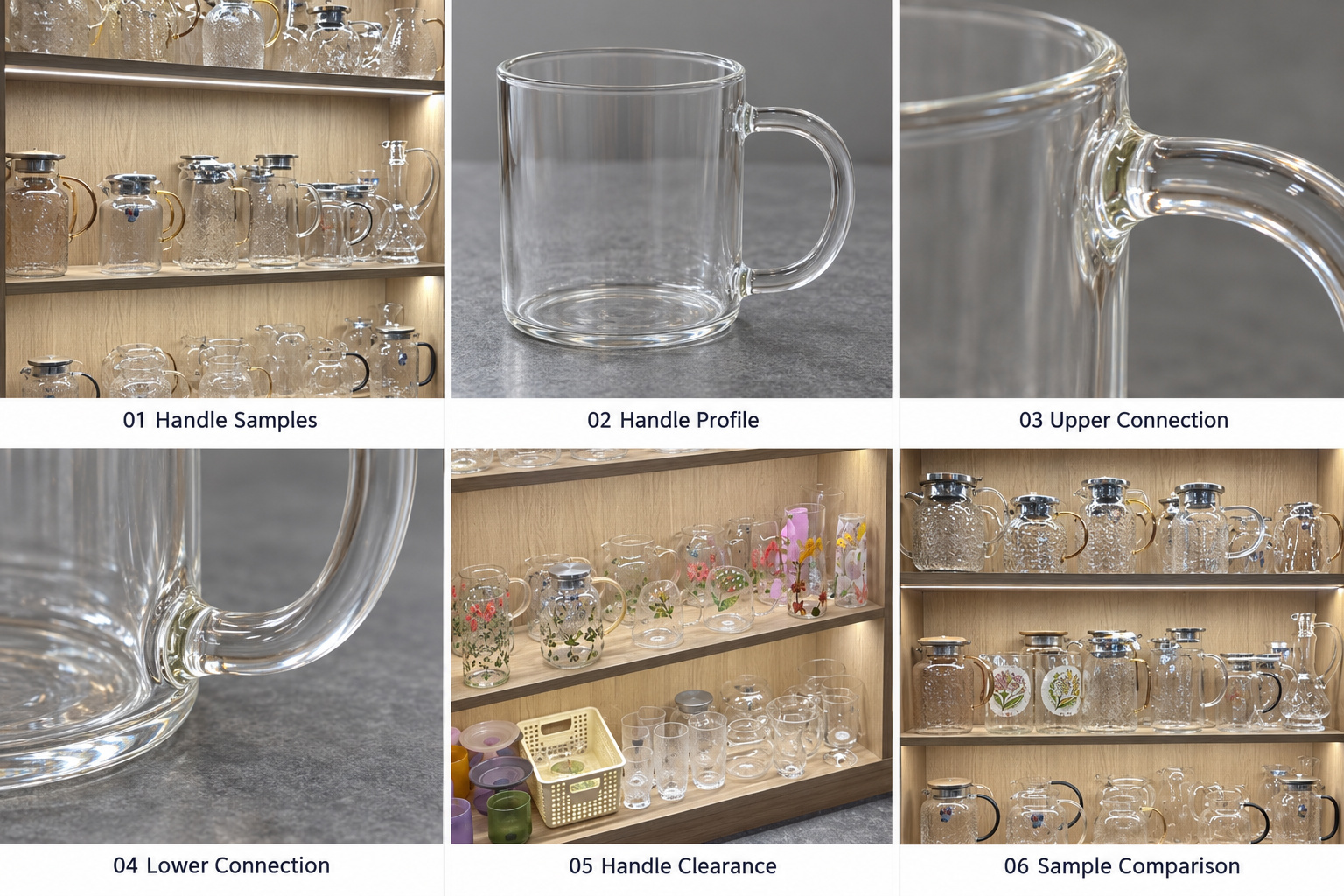
Glass Handle Position and Attachment
For handled mugs and tea cups, buyers should confirm handle shape, opening, projection and position relative to the cup body. Finger clearance and the space between the handle and rim can affect handling and packaging dimensions.
The attachment method depends on the selected material and production route. Some models have separately formed handles joined during production, while others use a different construction. We confirm the applicable arrangement with the producer rather than assuming every handled glass follows the same process.
Changes to handle size or connection points require feasibility review. They may affect tooling, sample development and the finished appearance around the attachment area.
 Lids, Straws and Other Removable Components
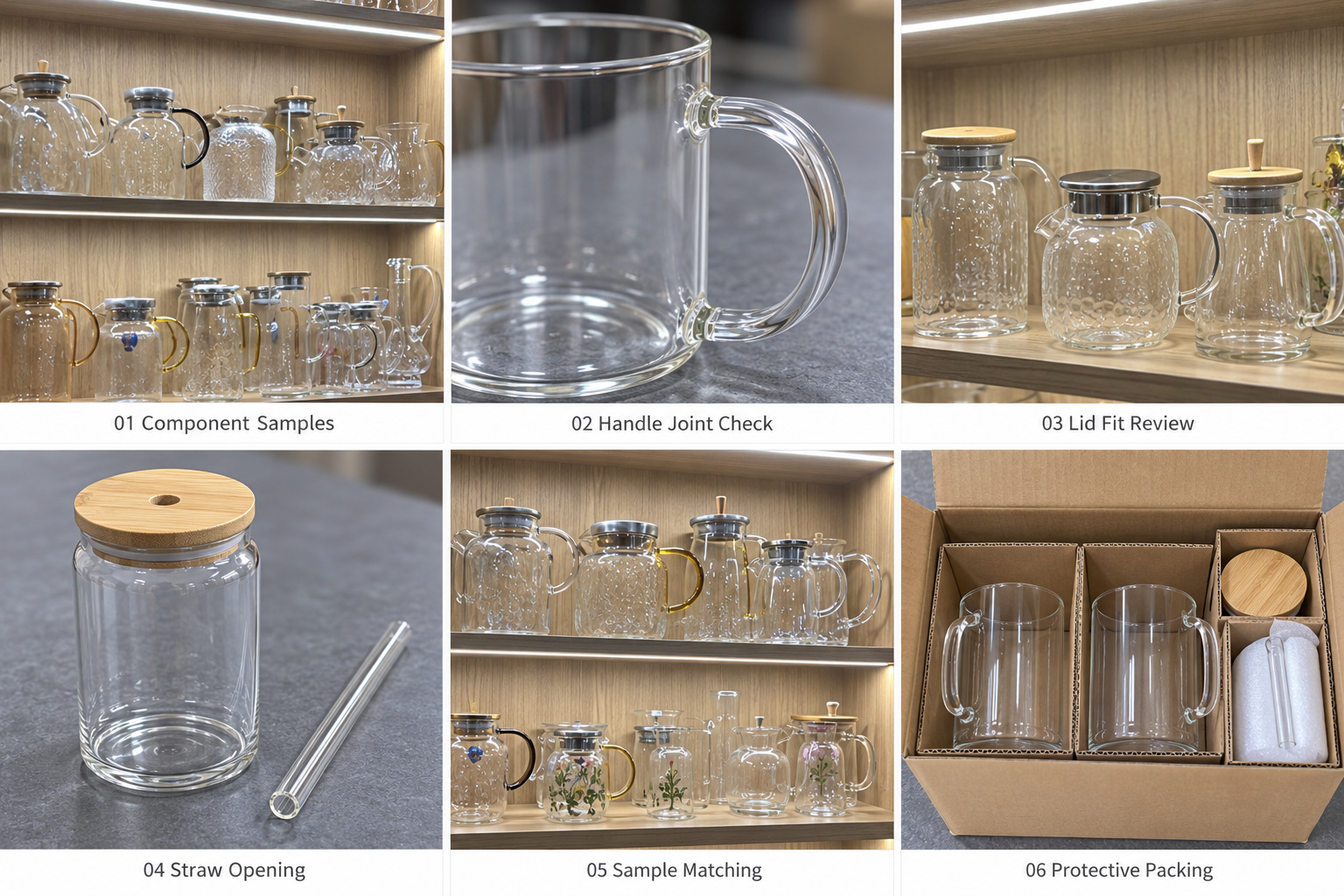
Glass can cups and selected mugs may be supplied with lids, straws or other agreed accessories. These parts need to be matched to the actual cup opening, not selected by nominal capacity alone.
Relevant details include the mouth diameter, lid construction, seating position and straw opening. Where a seal is included, its material and fit should also be confirmed. A fitted lid does not automatically establish leak resistance or suitability for transport with liquid.
Buyers should identify whether accessories will be packed separately, placed inside the cup or supplied as an assembled set. Each arrangement changes the protection needed during shipment.
Samples and Component Approval
An approval sample should include the intended cup body and specified components. Reviewing the glass alone cannot confirm the fit of a later lid or the clearance of a revised handle.
We recommend recording the approved component references, dimensions and packing arrangement together. Our glass cup sample development process helps establish which details require physical confirmation before production. If a component changes after approval, the affected fit and packaging should be reviewed again.
Inspection of Connections and Fit
Agreed inspection points may include visible cracks around handle connections, handle alignment, sharp edges, component dimensions and consistency with the approved sample. Lid seating and accessory fit should be checked using the actual production parts.
Any load, pull, leak or temperature-related testing requires a separately agreed method and acceptance criteria. Visual inspection alone does not establish these performance characteristics. The glass cup quality inspection requirements should identify which checks apply to the selected construction.
 Protective Packing and Order Planning
Handles and projecting components require space within the pack to reduce contact with adjacent products. Loose lids and glass straws also need restraint and separation. Our glass packaging and export preparation covers the packing details to review before dispatch.
MOQ, sample cost and lead time depend on the cup model, component availability and any development work. Send the product reference, quantity, handle or accessory requirements, intended use and destination. Glasmero will review component compatibility, approval needs and production arrangements before confirming the quotation.