


Define the Color and Finish You Need
Glasmero supports importers, distributors, hospitality suppliers and glassware brands reviewing color and finish requests for glass cups. We coordinate with product-specific manufacturing partners to check what is suitable for the selected model, quantity and intended use.
Start with a product reference and describe the required appearance. Specify whether you want transparent colored glass, an applied exterior finish or printed decoration. These requests involve different production considerations and should be assessed separately before samples and prices are confirmed.
Distinguish Glass Color from Surface Decoration
A colored appearance may come from the glass itself or an applied treatment. The production route affects available shades, transparency, surface feel and the requirements for subsequent decoration.
We check the proposed option against the cup’s existing material and construction. A color available on one tumbler should not be assumed available on a handled mug, double-wall cup or wine glass.
Review glass material options alongside the appearance requirement. Frosted, opaque, gradient or other special effects can be submitted for feasibility review, but availability must be confirmed for the exact item.
 Use Physical References for Color Approval
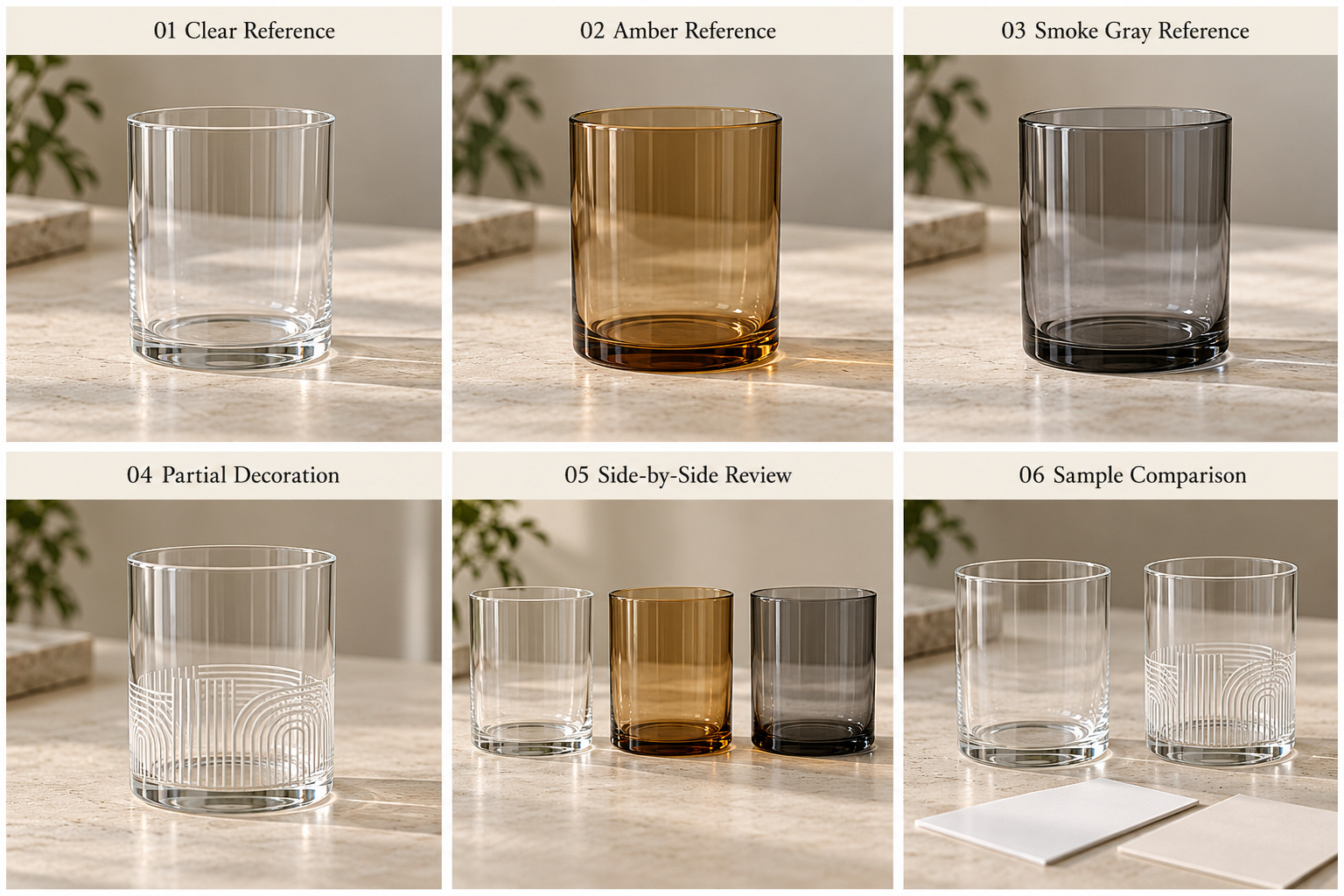
Send a physical reference where possible, together with photographs and any specified color code. Explain whether the priority is the empty cup’s appearance, its appearance when filled or consistency across a coordinated range.
Screen images and printed color references help communicate direction, but they do not reproduce transparent glass exactly. Wall thickness, cup shape, background and lighting can change the perceived shade.
During glass cup sample development, compare references under agreed lighting and viewing conditions. Record the accepted shade, coverage, transparency and any permitted variation before production approval.
Check Logo Compatibility and Intended Use
Provide logo artwork early if the cup also requires printing or decals. Background color and surface texture can affect contrast, placement and the visible result.
We review logo decoration with the selected finish rather than approving each element independently. A decorated physical sample should show the combination proposed for production.
Identify the intended beverage use, cleaning method and any required durability criteria. Dishwasher resistance, abrasion resistance or food-contact suitability must be assessed for the specific finished product. Define the decoration area, including any required clearance from drinking edges, before sampling.
Agree Appearance Checks and Packing Protection
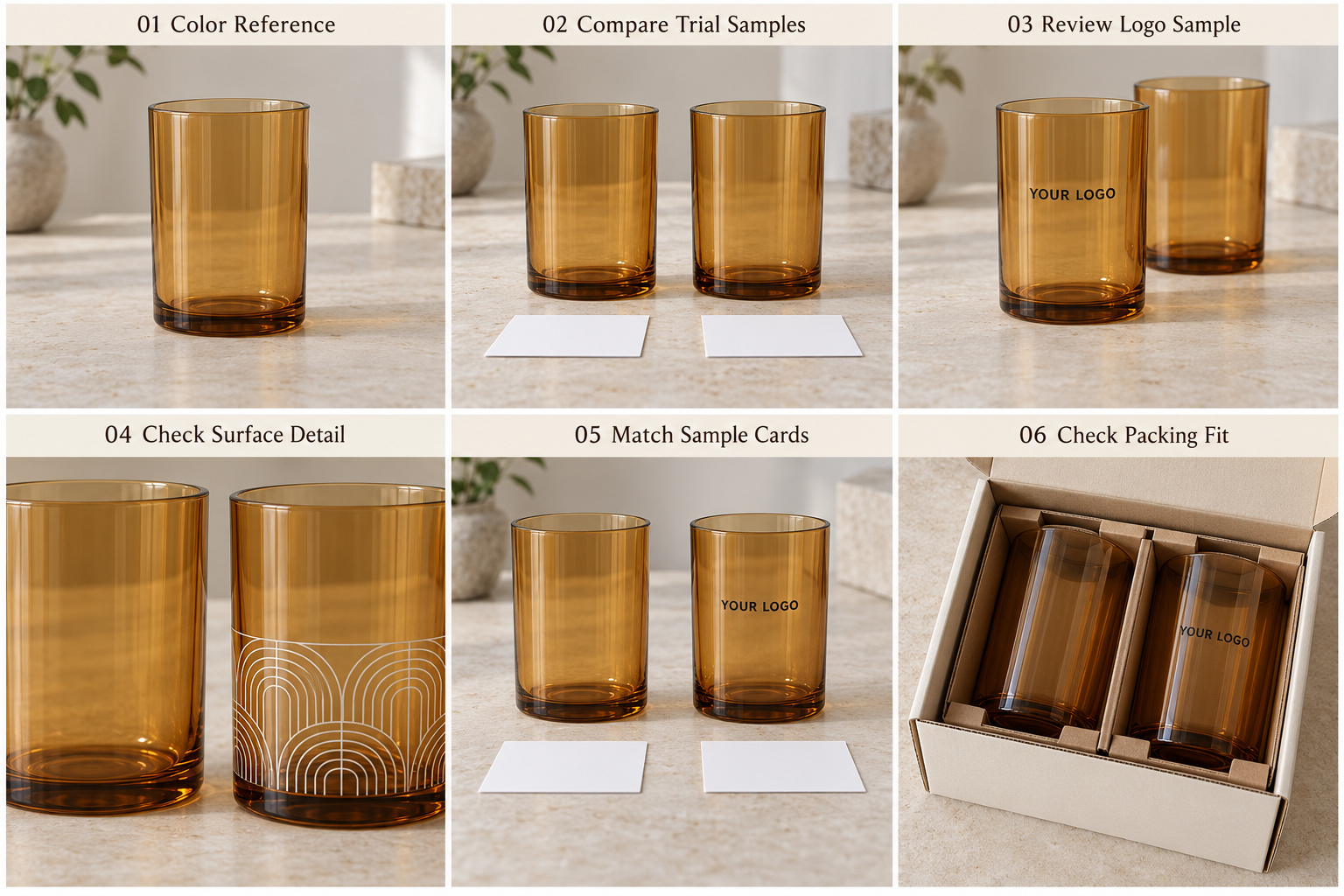
Inspection requirements should describe the visible features that matter to the order. Depending on the confirmed finish, these may include shade consistency, coverage boundaries, surface marks, decoration alignment and comparison with the approved sample.
Checks should use agreed references and acceptance conditions. A color name alone is not a sufficient production standard, particularly when several cup shapes are supplied together.
Packing must also suit the finished surface. We review separation and protective inserts to limit unwanted contact between cups, accessories and packaging during handling and shipment.
 Confirm MOQ, Sample Costs and Production Timing
MOQ depends on the model, color or finish route, decoration and packaging requirements. A requested shade may involve a different production arrangement from an available clear version.
Sample preparation, revisions and any applicable setup charges are reviewed before proceeding. Production timing is assessed after the appearance specification and approval requirements are established.
Send the cup reference, desired effect, quantity per color, logo requirements, destination and requested dispatch window. Glasmero will review suitable options and clarify the sampling and order conditions.