


Build the Packing Specification Around the Cup
Glasmero supports importers, distributors, hospitality suppliers and private label brands reviewing packaging for glass drinkware. We coordinate box requirements and protective packing with the relevant product and packaging partners.
Start with the confirmed cup model, dimensions, quantity and intended delivery arrangement. A tumbler, handled mug and stemmed wine glass need different protection. Packaging should be assessed using the actual product, including its decoration and accessories, before the layout and quotation are finalized.
Choose Individual Boxes, Set Boxes or Divided Cartons
Individual boxes can combine brand presentation with product separation. Set boxes need a defined layout for every cup and accessory. Divided cartons may suit orders where individual branded boxes are unnecessary.
Specify the number of cups per box and boxes per master carton. Include any requirements for opening, storage or onward distribution, since these influence the proposed arrangement.
For glass cup sets, confirm the complete contents first. Different cup combinations, lids or straws can change the insert layout, box dimensions and packing cost.
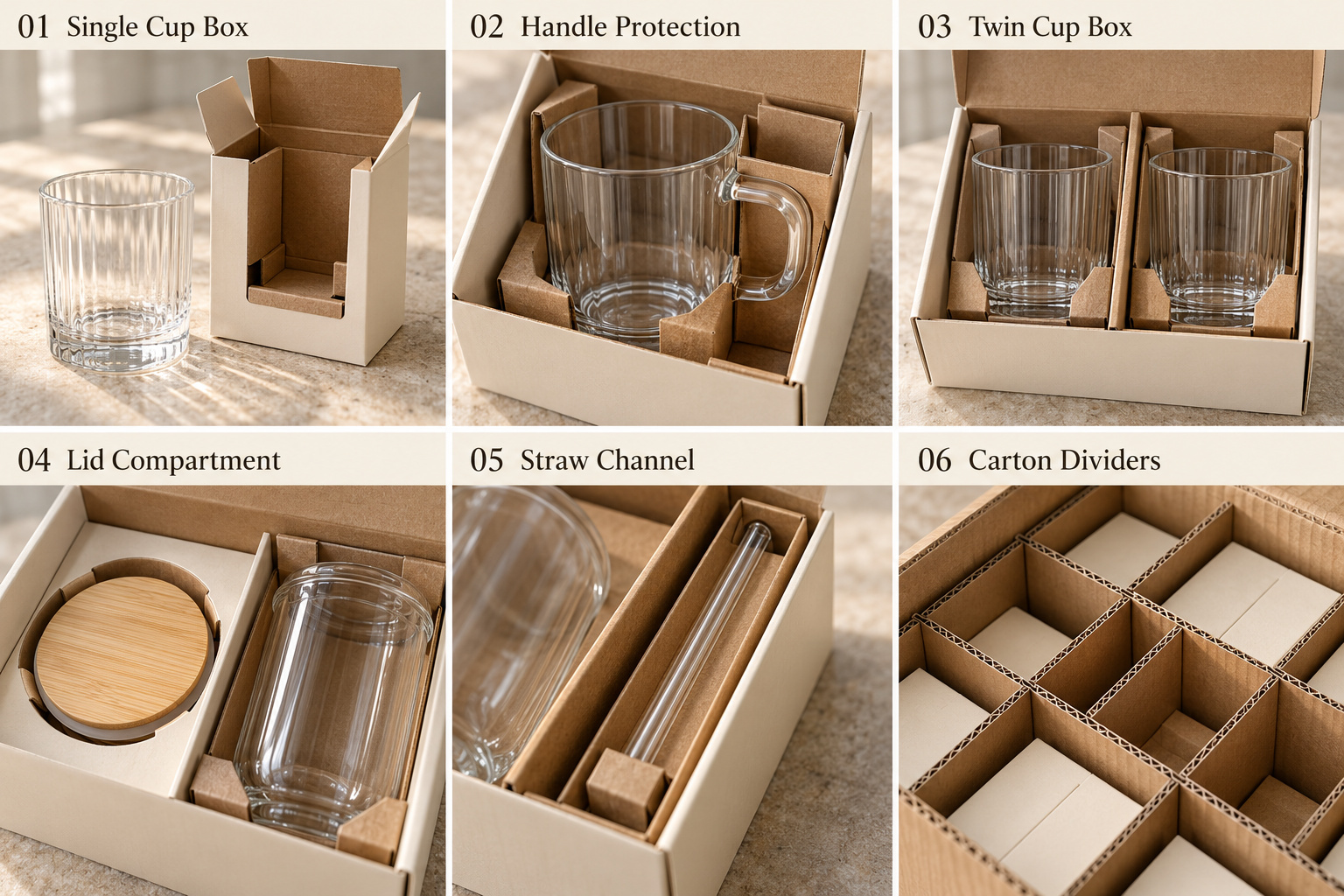 Protect Rims, Handles, Stems and Accessories
Protective inserts should support the selected product without creating unnecessary pressure on vulnerable areas. We review rim clearance, base support and separation between glass surfaces.
Handles and stems require space and suitable support within the proposed pack. Glass straws should be separated from cup bodies, while lids need their own position when supplied loose.
The decoration also matters. Printed or finished surfaces should not rub against adjacent products during handling. Insert fit and product movement are reviewed with the sample; stronger-looking cardboard alone does not establish transport performance.
Confirm Box Artwork, Labels and Shipping Marks
Provide the brand artwork, preferred box appearance and required product information. Confirm which panels carry the logo, SKU identification, barcode or other buyer-supplied content.
Artwork approval should refer to the correct packaging dimensions and version. Changes to the cup or insert can affect the box layout, so the structural arrangement should be settled before final printing approval.
Master-carton marks and packed quantities must match the order specification. Distinguish individual product labels, set labels and outer-carton information to reduce identification errors during packing and receiving.
Review a Complete Packed Sample
A complete packed sample allows the buyer to check product fit, component placement, box closure and the proposed presentation together. An empty box sample cannot confirm how the finished glass will sit inside it.
During sample development, identify whether the packaging uses final printed materials or a structural sample. Record any differences that remain before approval.
If drop testing or another packaging assessment is required, agree the method, packed configuration and acceptance criteria separately. Testing is not assumed to be included with every packaging order.
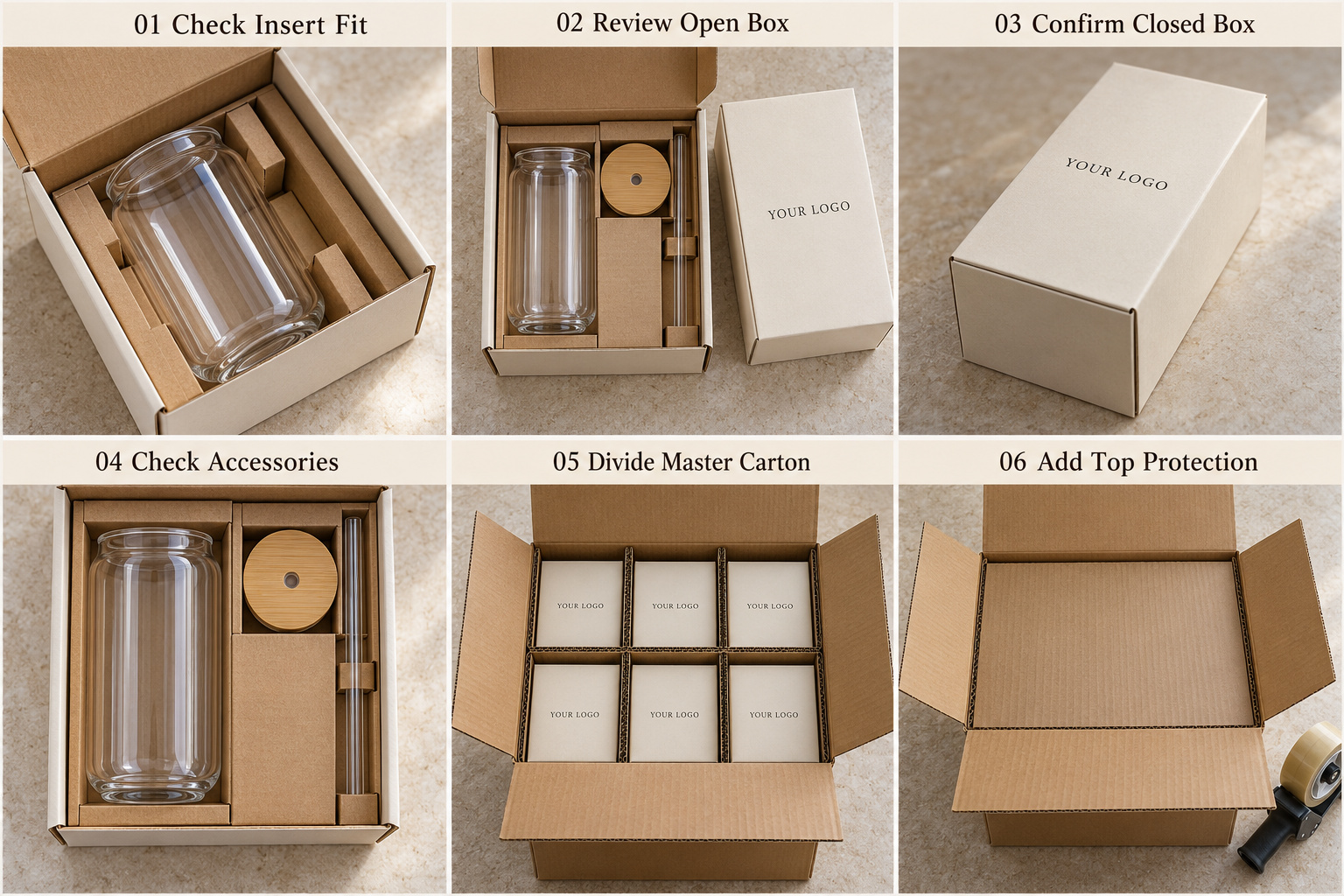 Confirm Costs, Timing and Export Preparation
Packaging MOQ may differ from the cup minimum, particularly where printed boxes or dedicated inserts are required. The quotation should identify applicable sample, printing setup and packaging charges.
Confirm the proposed packing quantities and carton dimensions before comparing shipment estimates. Changes to box size or the number of units per carton can affect handling and shipping volume.
Our packaging and export preparation review also covers dividers, carton counts, shipping marks and packing-list details. Send the cup reference, quantity, artwork, destination and requested dispatch window so Glasmero can review the packaging and production schedule together.