


Decide Whether Your Project Needs New Tooling
Glasmero supports custom glass cup mold development through feasibility review and coordination with manufacturing partners. This service suits importers, distributors and private label brands developing a cup profile that available models cannot meet.
Before discussing tooling, we compare your requirements with existing options. A different logo or branded box generally does not require a new glass mold. Changes to the cup profile, base or molded details may require tooling, depending on the material and forming method.
For projects that can use an existing model, reviewing available glass cup sizes and shapes can reduce development work.
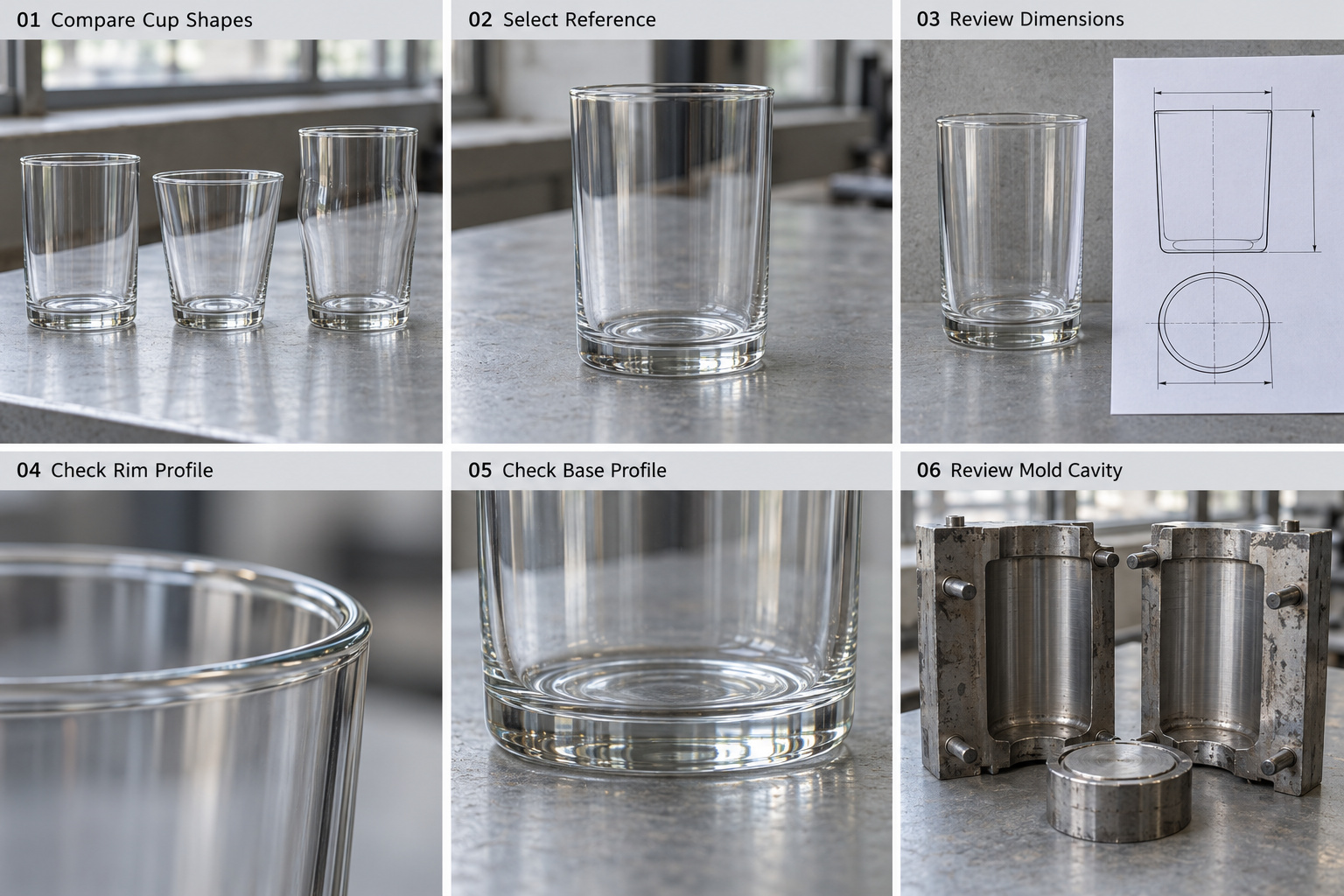 Provide a Clear Cup Development Brief
Send a dimensioned drawing, physical reference sample or clear photographs with target measurements. Identify which features must remain fixed and which can be adjusted.
The brief should include:
- Glass material and intended application.
- Cup height, opening diameter, base dimensions and target capacity.
- Handle, lid or straw requirements, where applicable.
- Target weight, decoration and packaging format.
- Expected order quantity and required delivery date.
Clarify whether capacity means brimful volume or a defined filling level. If your reference is an existing commercial product, identify the features you want to develop and confirm that you have the necessary design rights.
Review Forming Feasibility Before Tooling
A proposed shape must suit the selected material and production route. Mold development does not apply in the same way to every glass cup.
With the relevant manufacturing partner, we review features such as profile transitions, base geometry, handle clearance and mold release. Thin sections, deep recesses or complex details may need adjustment. Finished dimensions also require agreed tolerances rather than an assumption that every piece will exactly match a drawing.
For handled or double-wall products, forming and joining requirements need separate consideration. Material selection should be reviewed alongside the design through our glass material options.
Confirm Tooling Scope, Costs and Order Conditions
A tooling quotation should identify the proposed tooling scope, trial arrangements and exclusions. Additional components, revisions or further trials may affect the development cost.
Before payment, confirm tooling ownership, storage, maintenance responsibilities and repeat-order arrangements in writing. These conditions depend on the agreed project terms.
Tooling costs and production MOQ are separate considerations. A new mold does not automatically make a small production run practical. Sample timing and bulk production scheduling can be assessed once the design, manufacturing route and trial scope are sufficiently defined.
Review Trial Samples Before Production Approval
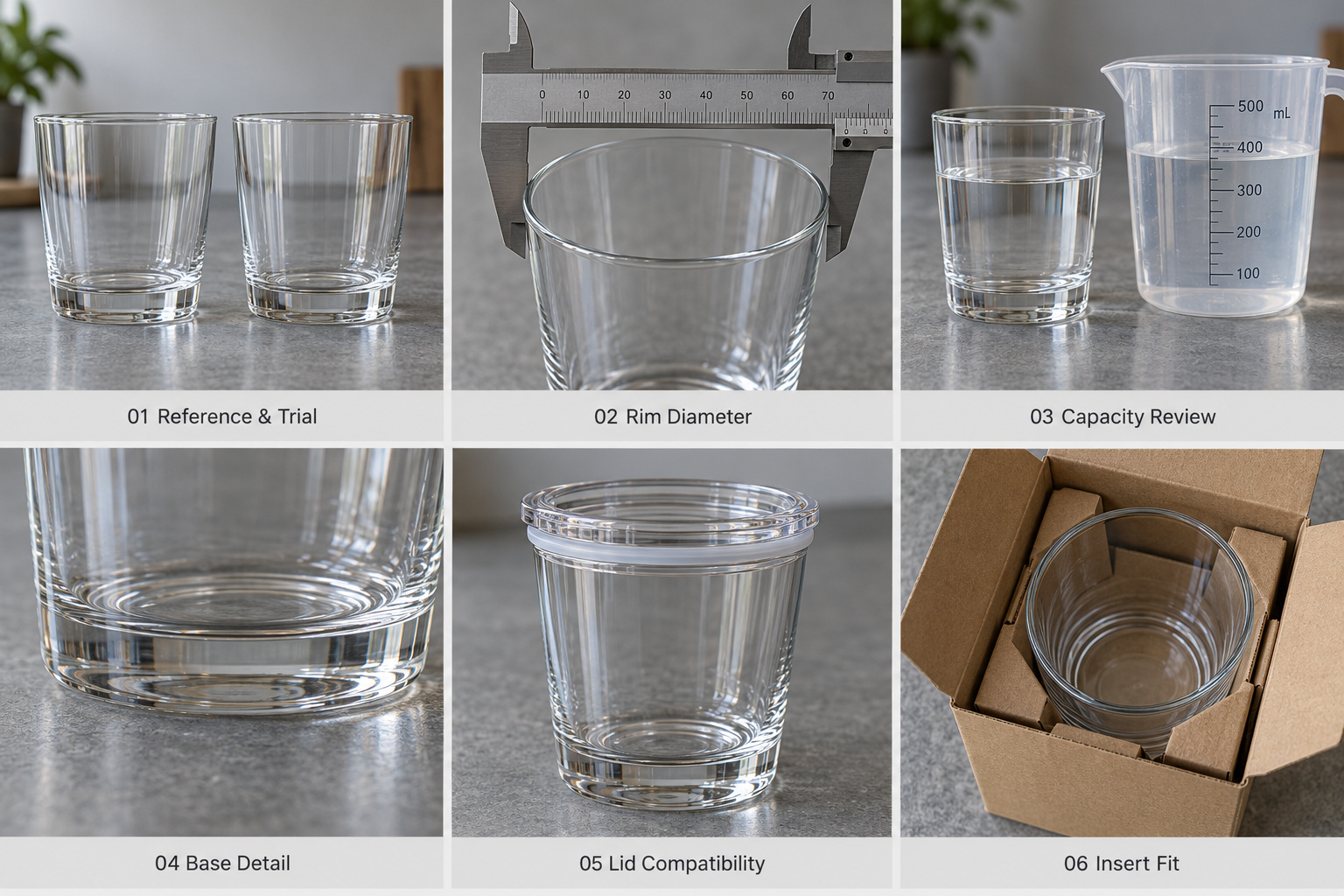
Trial samples establish whether the developed shape meets the agreed requirements. Review dimensions, capacity, weight, rim condition, base stability and overall appearance against the approved specification.
Where relevant, check handle clearance, lid fit and packaging compatibility. Decoration may require a separate sample stage after the cup shape is accepted.
Record requested revisions clearly and distinguish necessary corrections from new design changes. Our glass cup sample development process helps define the reference used for subsequent production approval.
 Send Your Design for a Development Review
Share your drawing or reference sample, target quantity, material preference and delivery requirements. Include destination-market requirements and any requested testing.
Glasmero can then coordinate a review of existing-model alternatives, tooling feasibility and the proposed sample stages. Before bulk production, the approved sample, specification, inspection criteria and packing arrangement should form a consistent order reference.