


Confirm the Annealing Route for Your Cup
Glasmero coordinates glass cup projects with product-specific manufacturing partners for importers, distributors and private label brands. Annealing and controlled cooling form part of the applicable production sequence after glass shaping or relevant thermal processing.
Annealing reduces residual internal stress through a controlled temperature cycle. The appropriate treatment depends on the glass and product structure, so a single schedule should not be applied to every cup model.
Before discussing production arrangements, we confirm the selected model, material and forming route. Furnace-based cups and products made from prepared glass tubing may follow different manufacturing sequences.
 Match the Process to Material and Structure
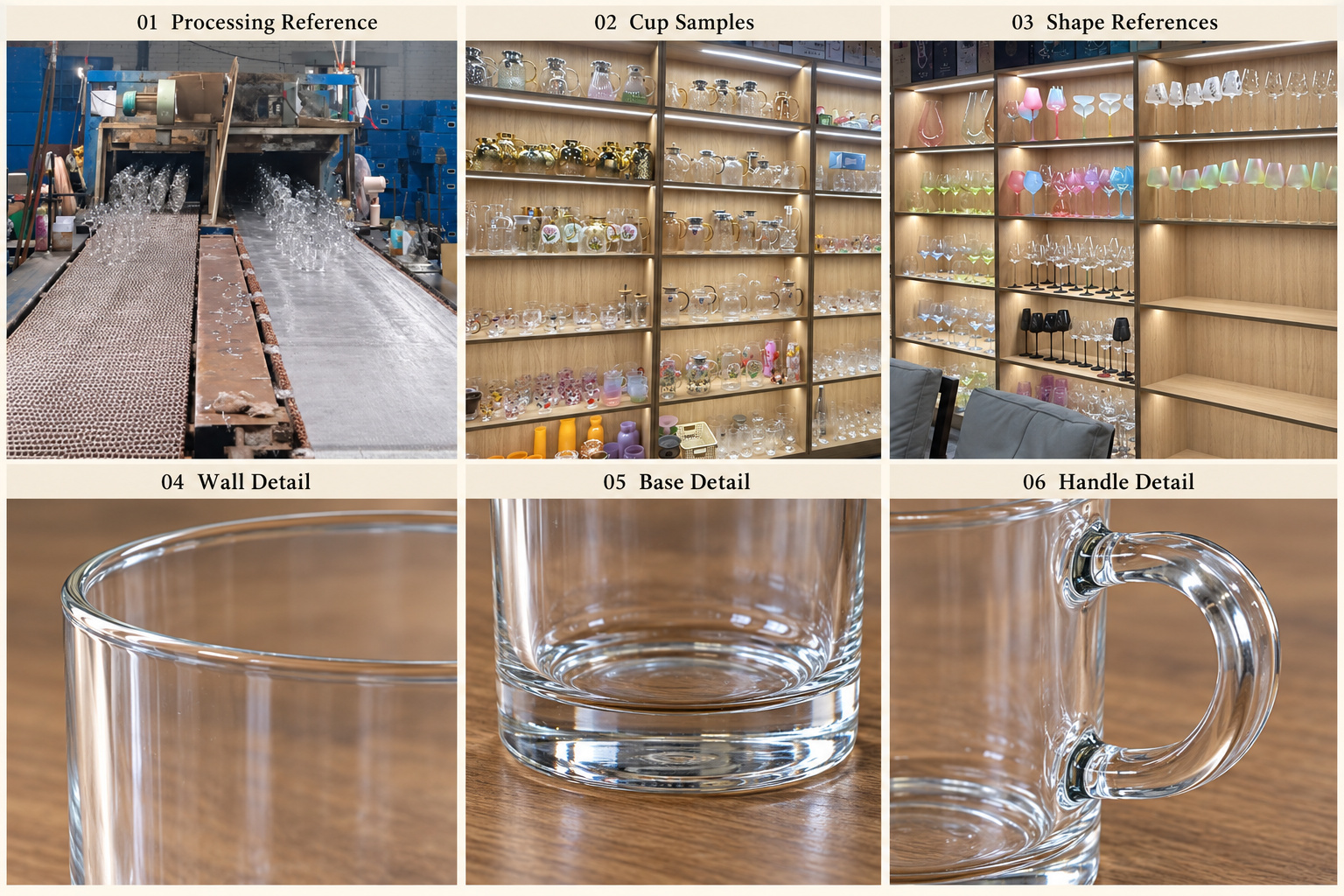
Glass composition, shape and thickness distribution influence annealing requirements. A thin drinking glass, a thick-base tumbler and a handled mug need assessment against their respective designs. Technical guidance identifies composition and shape as factors in selecting an annealing schedule.
Confirm the material specification alongside the cup drawing or reference sample. Include overall dimensions, intended capacity and important structural features rather than relying only on a product photograph.
Our glass forming and shaping page explains how the selected profile connects with production planning. Changes to the base, wall or handle should be reviewed before the sample becomes the order reference.
Understand What Controlled Cooling Addresses
Controlled cooling helps manage the internal stresses associated with thermal processing. The responsible manufacturing partner determines the operating conditions appropriate to the selected glass and product.
For order planning, buyers should identify any process information or supporting records they require before quotation. Availability and scope need confirmation for the particular model and production arrangement.
A clear cup photograph cannot establish annealing quality. Likewise, a conveyor photograph does not confirm a cooling schedule or identify the equipment as an annealing lehr. Process descriptions should correspond to verified production information.
Review Samples After Cooling
Sample review should compare the finished cup with the agreed reference. Check the profile, mouth dimensions, height, capacity and base contact. For handled cups, include handle clearance and the appearance of attachment areas.
Visible chips, cracks, distortion and differences in shape should be recorded with their location and extent. Consistent lighting and viewing conditions help buyers and the production team discuss the same concern.
Our glass cup quality inspection page explains how appearance and dimensional requirements can form part of an agreed inspection scope. Visual checks do not establish residual stress levels. Any required stress assessment needs an appropriate method, acceptance criteria and applicable records.
 Coordinate Decoration, Accessories and Packing
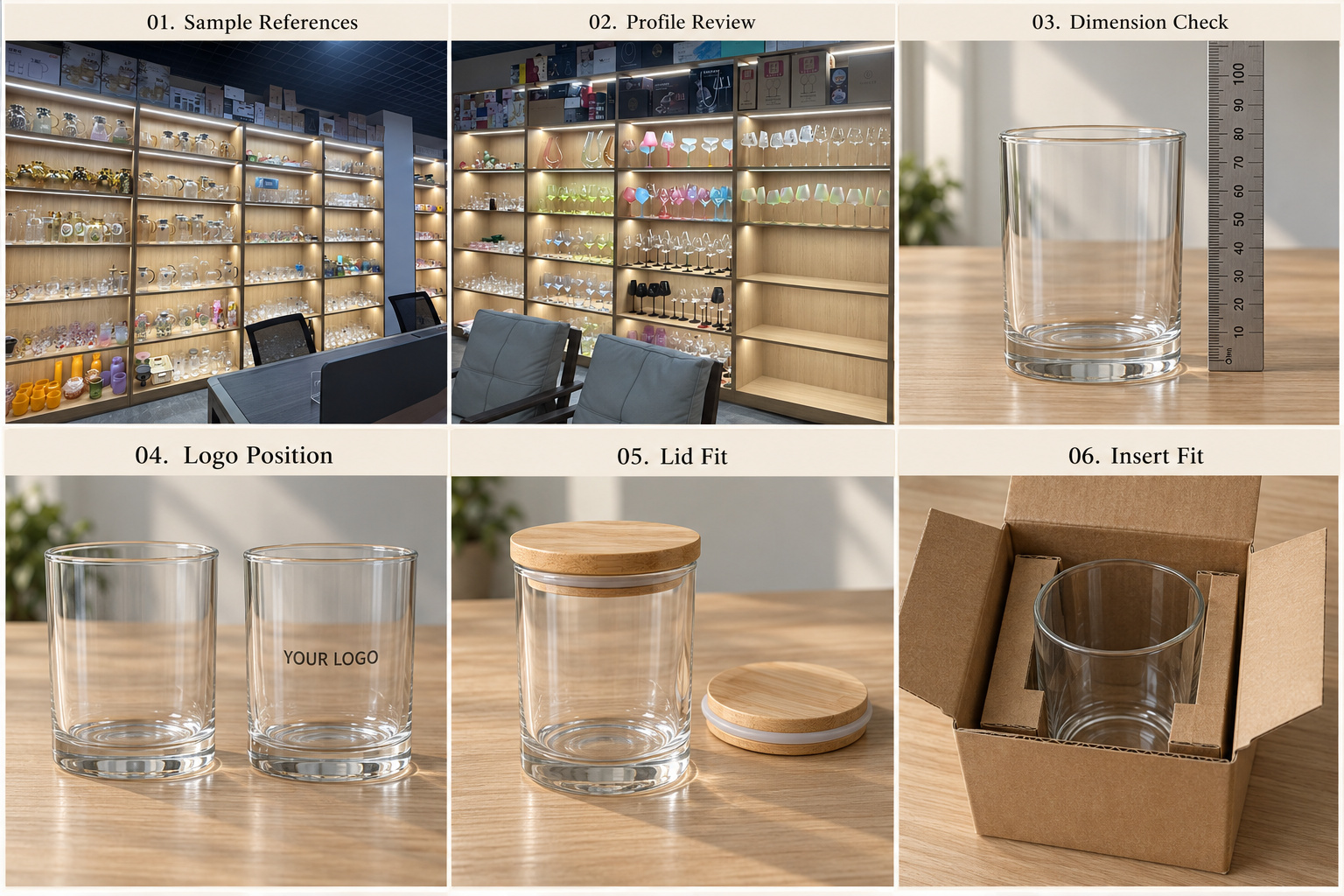
Confirm decoration requirements alongside the proposed production sequence, including whether subsequent processing involves additional heat. Artwork placement, colour and finish should remain linked to the approved cup model.
For cups supplied with lids or straws, use the selected components during fit review. A similar-looking lid should not replace the agreed accessory without checking its compatibility with the actual rim.
Packaging also needs confirmation against the finished product. Review insert clearance, cup separation and protection around vulnerable areas. Our custom glass cup packaging page covers packaging options that can be assessed with the sample.
Annealing information alone does not establish suitability for hot liquids, dishwashers or sudden temperature changes. Such claims require evidence relevant to the product and intended use.
Define Requirements Before Order Confirmation
Send your preferred model, material, quantity, dimensions and destination market. Include decoration files, accessory details, packaging requirements and any requested testing or documentation.
As your glass cup supplier, Glasmero can coordinate confirmation of the applicable production route, sample scope and quotation conditions. MOQ and timing depend on the selected model and production arrangements.
Keep the approved sample, written specification and inspection requirements aligned before production. These references provide a shared basis for reviewing the cups through decoration, accessory fitting and final packing.