


Inspection Requirements Before Order Confirmation
Glass cup quality inspection starts with an agreed product specification and approval reference. Importers, distributors, hospitality suppliers and private label brands need to define which characteristics matter before production begins.
Glasmero coordinates inspection requirements with product-specific manufacturing partners. The selected model, intended use, decoration and packing arrangement determine the relevant checks. We review these details for each order rather than applying one acceptance standard to all eight glassware categories.
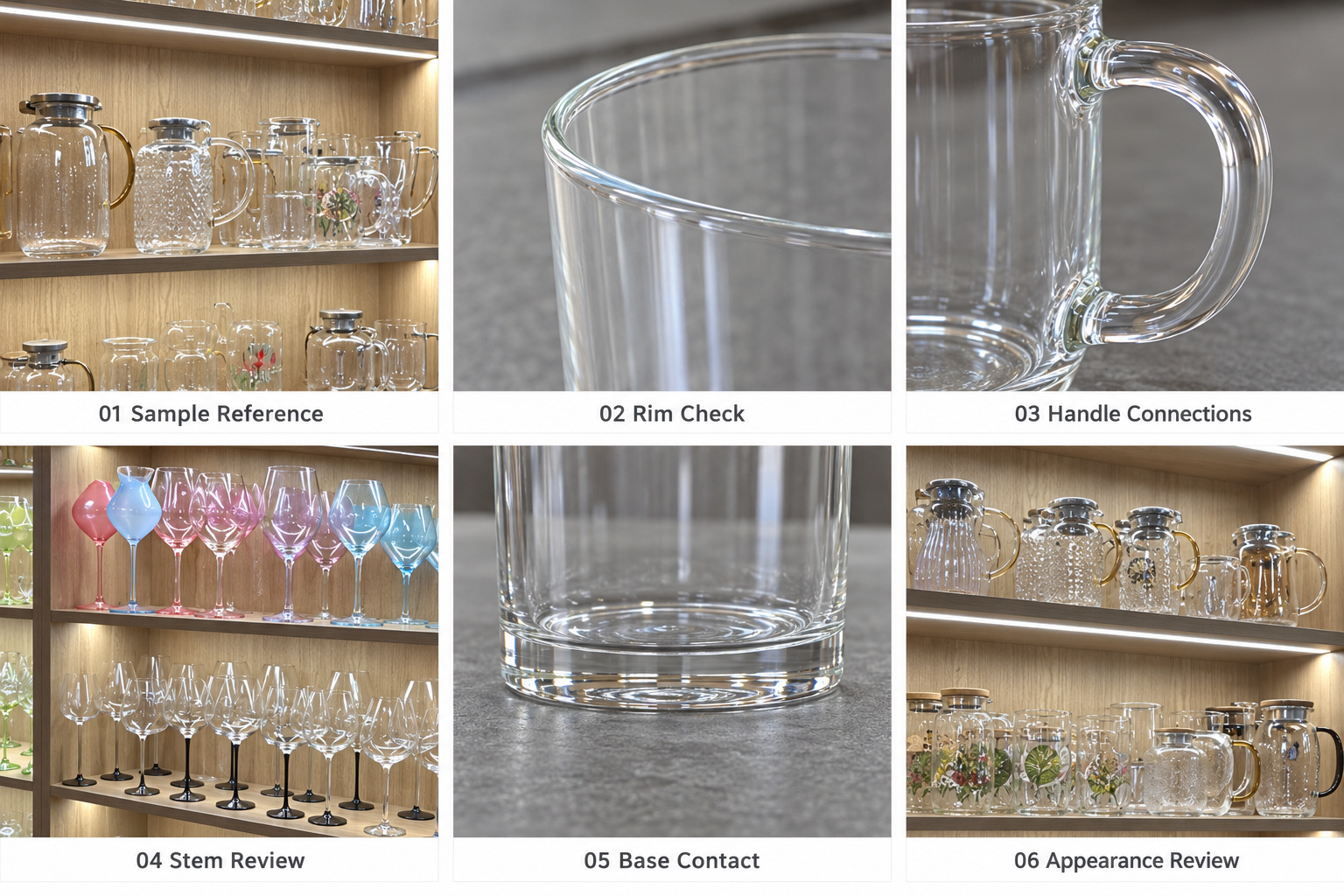
Approved Samples and Inspection References
The inspection reference should identify the model, glass material, capacity definition, key dimensions and any agreed tolerances. Decorated orders also require approved artwork placement, color references and finish details.
A physical sample helps establish appearance and construction, but measurable requirements should be recorded separately. Our glass cup sample development process explains the approval stages. If the cup, decoration or accessories change, the affected inspection references should be updated before production continues.
Appearance, Rim and Structural Checks
Relevant visual checks may include chips, cracks, scratches, visible inclusions, bubbles and distortion. Acceptance depends on the defect type, location and agreed criteria. A drinking-edge defect needs different consideration from a minor cosmetic variation elsewhere on the glass.
Rim checks address edge continuity, visible damage and consistency with the approved profile. Handled mugs and stemmed glasses also require attention around connections and fragile sections. Base stability should be reviewed on a suitable level surface.
 Dimensions, Capacity and Component Fit
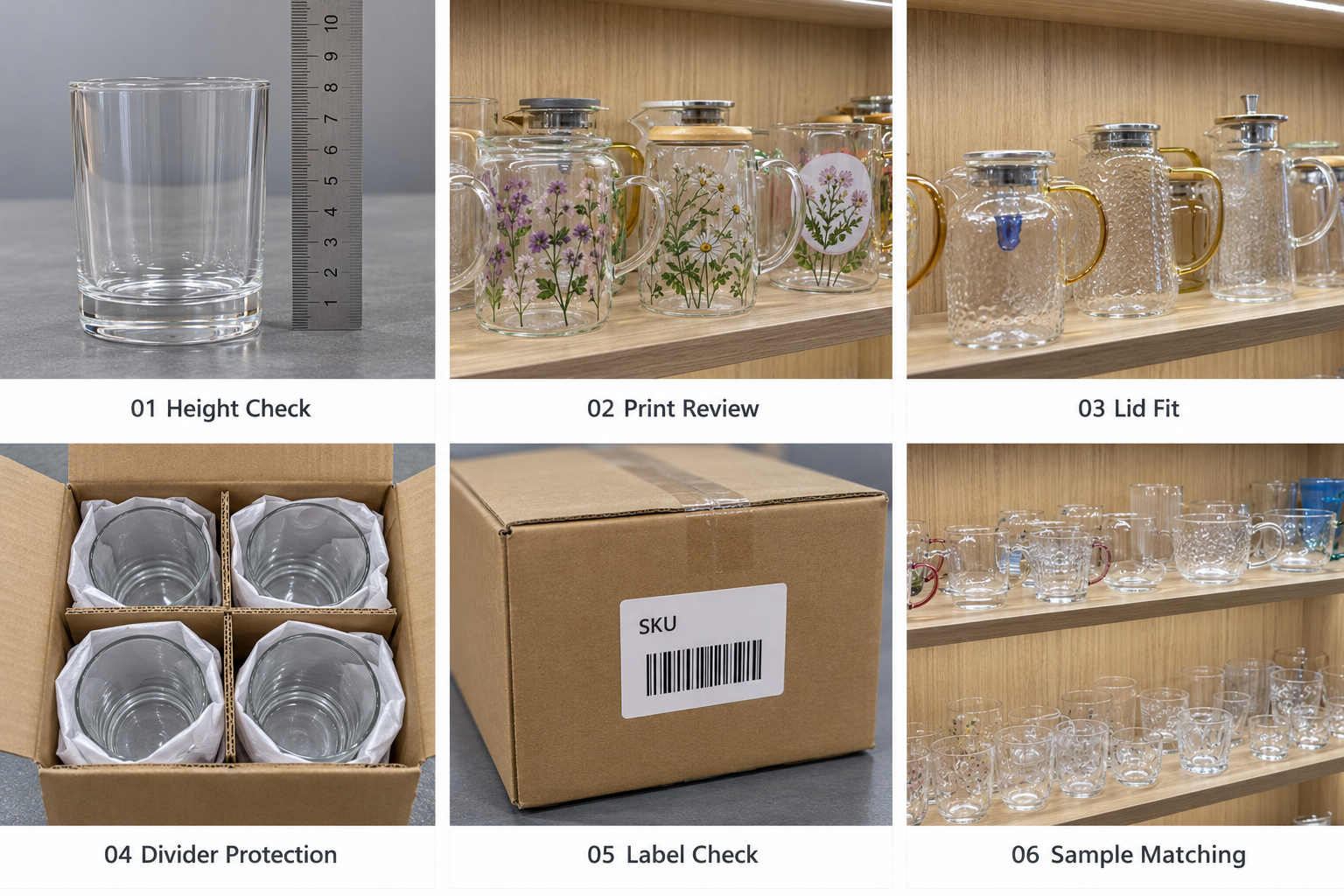
Dimensional checks may cover height, mouth diameter, base diameter and other specified features. Weight can be included where it forms part of the purchasing requirement. The measurement method and tolerance should be agreed for each critical dimension.
Capacity checks must distinguish brimful capacity from the intended serving volume. For cups supplied with lids or straws, inspection should also confirm the specified component references, lid seating and accessory fit. Matching nominal capacity alone does not establish compatibility.
Decoration and Performance Requirements
Printed glassware should be checked for artwork position, alignment, missing areas, smudging and consistency with the approved decoration sample. Multi-color designs may require registration checks where colors meet.
Performance testing is a separate requirement. Heat-use suitability, residual stress, handle strength, decoration adhesion or dishwasher resistance need an agreed method and acceptance criteria where applicable. We review testing needs for the exact product and decoration system; visual inspection does not establish these properties, and no certification is assumed.
Packing Checks Before Dispatch
Packing inspection should confirm the approved layout, item count and protection around rims, handles, stems and loose accessories. Products should remain separated as specified, with sufficient clearance to limit contact during handling.
SKU labels, barcodes, carton marks and packed quantities should match the order documents. Our glassware packaging and export preparation outlines the details to confirm. Any required transport testing should be discussed separately from a visual packing check.
 Inspection Scope, Findings and Shipment Planning
Buyers should specify whether they require production-stage checks, a pre-shipment inspection or third-party attendance. Sampling arrangements, defect classifications and reporting requirements need agreement before inspection. Where AQL sampling is requested, the applicable plan must be defined rather than assumed.
The order arrangement should also establish how findings are recorded, reviewed and rechecked before shipment release. Inspection timing must allow for any agreed corrective work. These checkpoints can be incorporated into the OEM order process.
Send Glasmero the product reference, quantity, destination market, approval requirements and inspection checklist. We will review the proposed scope, testing needs and scheduling implications before confirming order terms.