


Decoration Requirements for Branded Glassware
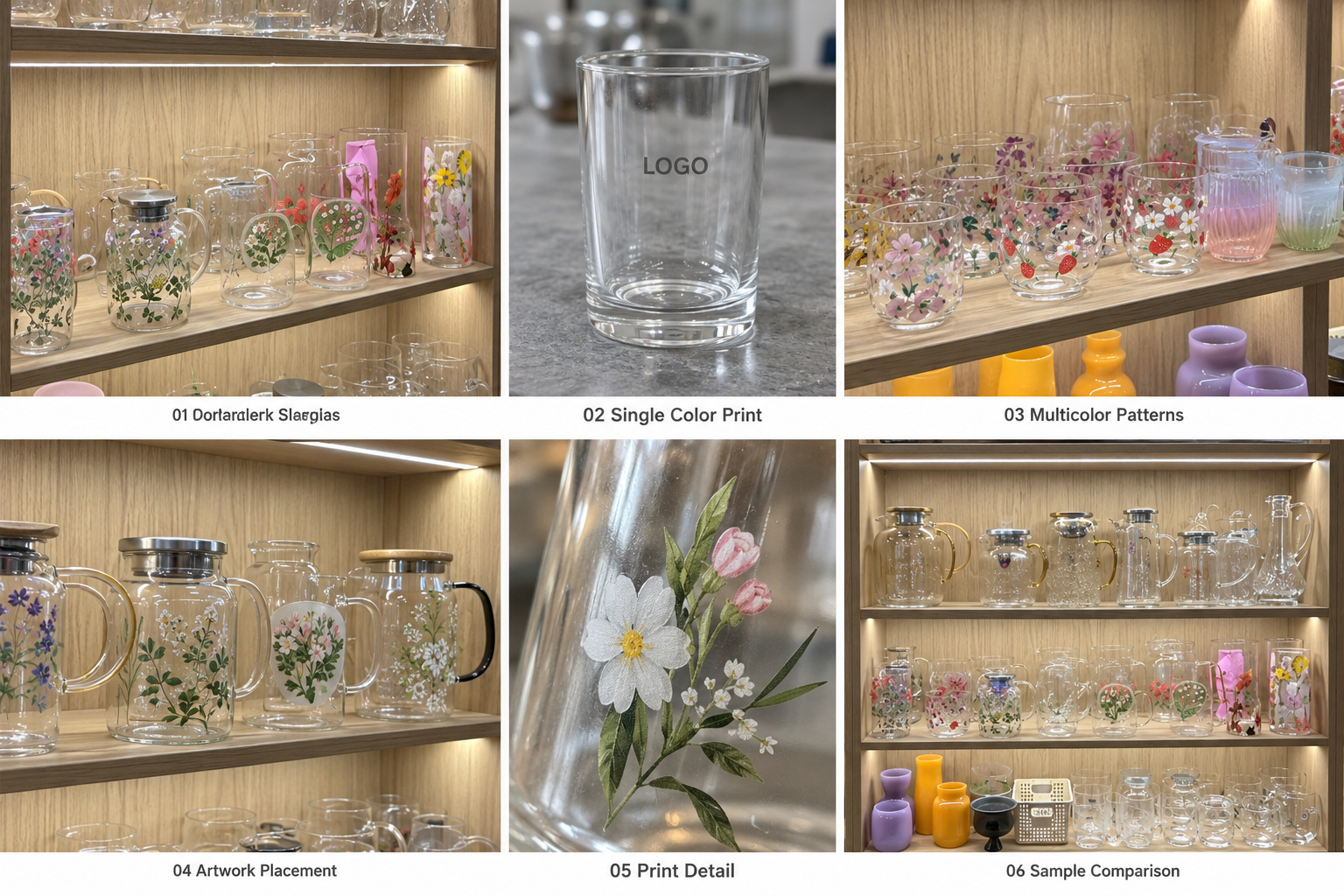
Glass surface decoration should be planned around the selected cup, artwork and intended use. A design that works on a straight-sided tumbler may need adjustment for a tapered beer glass, textured mug or curved wine glass.
Glasmero coordinates decoration requirements with suitable manufacturing partners for importers, distributors, hospitality suppliers and private label brands. Before quoting, we review the product reference, artwork dimensions, color requirements and quantity per design. The proposed method must suit the actual glass surface and the approved production arrangement.
Choosing a Suitable Printing Method
Screen printing and decals can be reviewed for suitable models. The choice depends on the artwork, number of colors, decoration area and cup geometry. Surface texture, handles and changes in diameter may limit access or affect the position of the design.
The proposed process should identify any required curing or firing stage. These arrangements vary with the decoration system and glass construction; not every cup can follow the same treatment. Our custom logo printing information explains the artwork details needed for an initial assessment.
 Artwork, Position and Surface Preparation
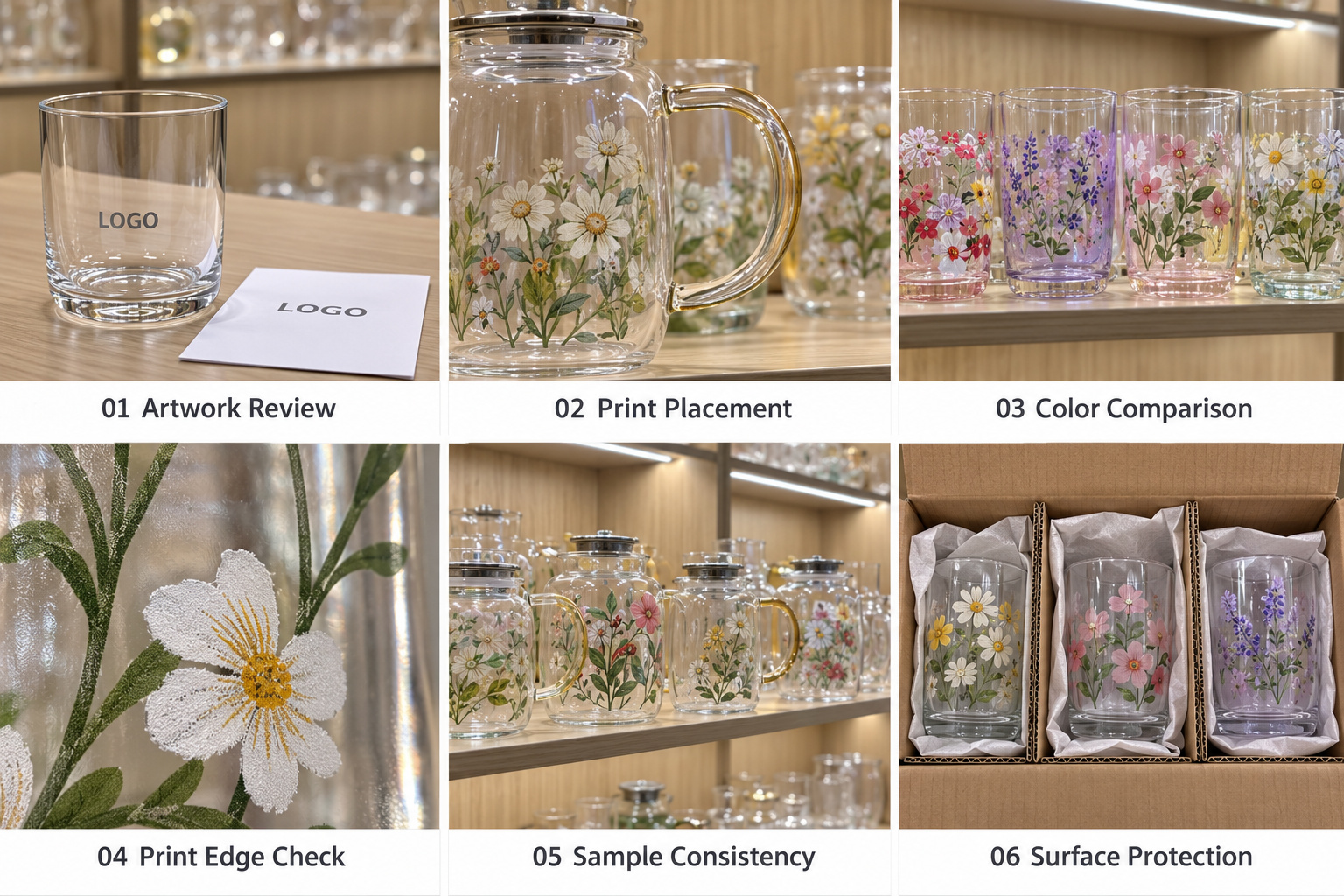
Buyers should provide vector artwork, color references and dimensions for each design. Placement should be defined from a consistent reference, such as the rim, base or handle centerline. Front-and-back designs also need an agreed relationship between the two printed areas.
Before decoration, the surface needs to be suitable for the selected process. Dust, residue or handling marks can interfere with the result. We review the applicable preparation with the producer and confirm any areas that must remain undecorated, including drinking-edge or food-contact zones specified for the project.
Decoration Samples Before Production
A digital layout helps confirm scale and position, but it cannot fully represent color on transparent glass. Glass thickness, the background behind the cup and the decoration method can change the visible effect.
A decorated sample should therefore be reviewed on the intended model. Buyers should approve artwork position, color reference, coverage and finish before production. The glass cup sample development process separates an initial visual proposal from a physical decoration approval. Changes after approval may require another sample and a revised schedule.
Inspection of the Finished Decoration
Agreed checks may include alignment, missing print, smudging, pinholes, incomplete transfer, color variation and consistency with the approved sample. Multi-color designs may also require registration checks where separate colors meet.
Adhesion, abrasion or dishwasher testing needs a defined method and acceptance criteria. A visually acceptable print does not establish wash resistance or food-contact suitability. Any supporting report must correspond to the relevant glass and decoration system. These requirements should be included in the glass cup quality inspection plan before production begins.
 Packing, Costs and Production Timing
Decorated surfaces should be protected from rubbing against adjacent glasses or abrasive packing materials. The packing arrangement should also allow any required curing or finishing stage to be completed before products are enclosed.
Quotation factors include quantity per artwork, color count, print size, placement, setup work, sampling and packaging. MOQ and lead time are assessed for the selected combination rather than assumed from the undecorated cup.
Send Glasmero your glass reference, artwork file, placement dimensions, quantity, intended use and destination market. Include any wash-resistance or testing requirements so the decoration route, sample cost and expected dispatch window can be reviewed together.