


Match the Forming Method to Your Cup Design
Glasmero coordinates glass forming and shaping requirements with product-specific manufacturing partners for importers, distributors and private label brands. The selected material, cup geometry and order quantity determine which production route needs review.
Drinking tumblers, handled mugs, can-shaped glasses and stemware can involve different forming operations. A method suitable for one model may not support another model’s wall profile, opening or construction.
Send a drawing, physical reference or clear photographs with target measurements. We review existing-model options first, then identify whether the proposed design requires tooling development or additional sample work.
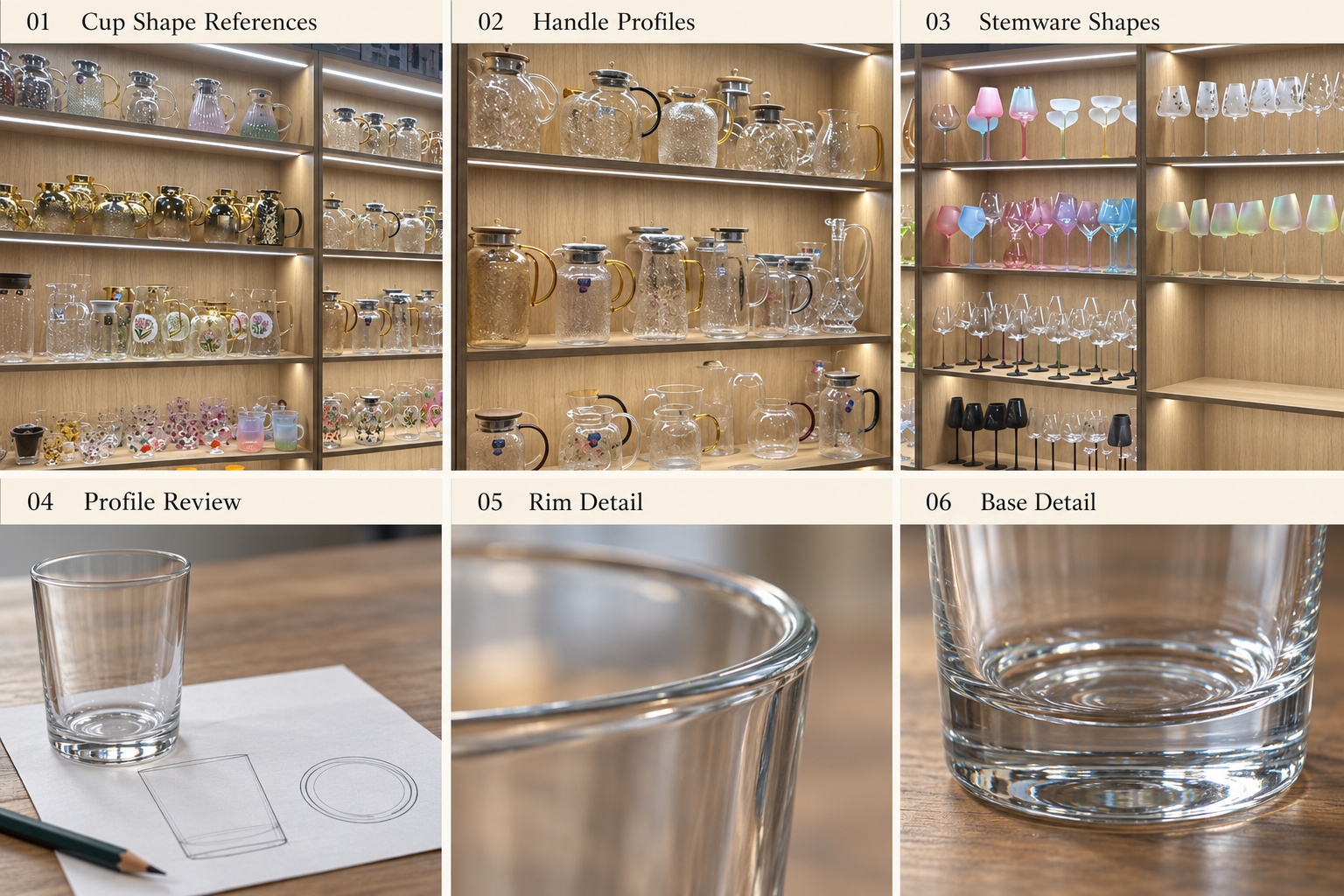 Review Pressing, Blowing and Tube Working
Applicable glass cup production routes include pressing, blowing and working from prepared glass tubing. These methods differ in how the glass is shaped and which product features can be achieved.
Pressed designs require review of the mold cavity and the way the forming tool creates the interior. Blown designs need assessment of the profile, opening and glass distribution. Tube-worked products start with tubing dimensions that must suit the intended body and subsequent forming operations.
The manufacturing partner confirms the suitable route. Material availability alone does not establish that a requested shape is feasible or economical at the proposed quantity.
Define the Dimensions That Affect Product Fit
A forming specification should identify overall height, opening diameter, base dimensions, target weight and capacity. Clarify whether capacity refers to brimful volume or a defined filling level.
Wall distribution and base thickness affect weight and appearance. Curved profiles, ribs and molded details can also influence decoration placement and packaging clearance.
Where lids are required, confirm the relevant rim dimensions and tolerances with the actual accessory. Our glass cup sizes and shapes page explains the measurements buyers should provide before development begins.
Assess Tooling and Additional Construction
An existing cup model provides an established starting point. Changes to its profile, base or molded features may require new tooling rather than an adjustment to the current mold.
Deep recesses, abrupt profile changes and complex details need feasibility review. Handled, stemmed and double-wall products may involve separate forming or joining operations, with additional alignment and clearance requirements.
Before committing to glass mold development, confirm the tooling scope, trial arrangements, revision terms and repeat-order conditions. Tooling cost and production MOQ should be reviewed separately.
Approve Trial Samples Before Production Release
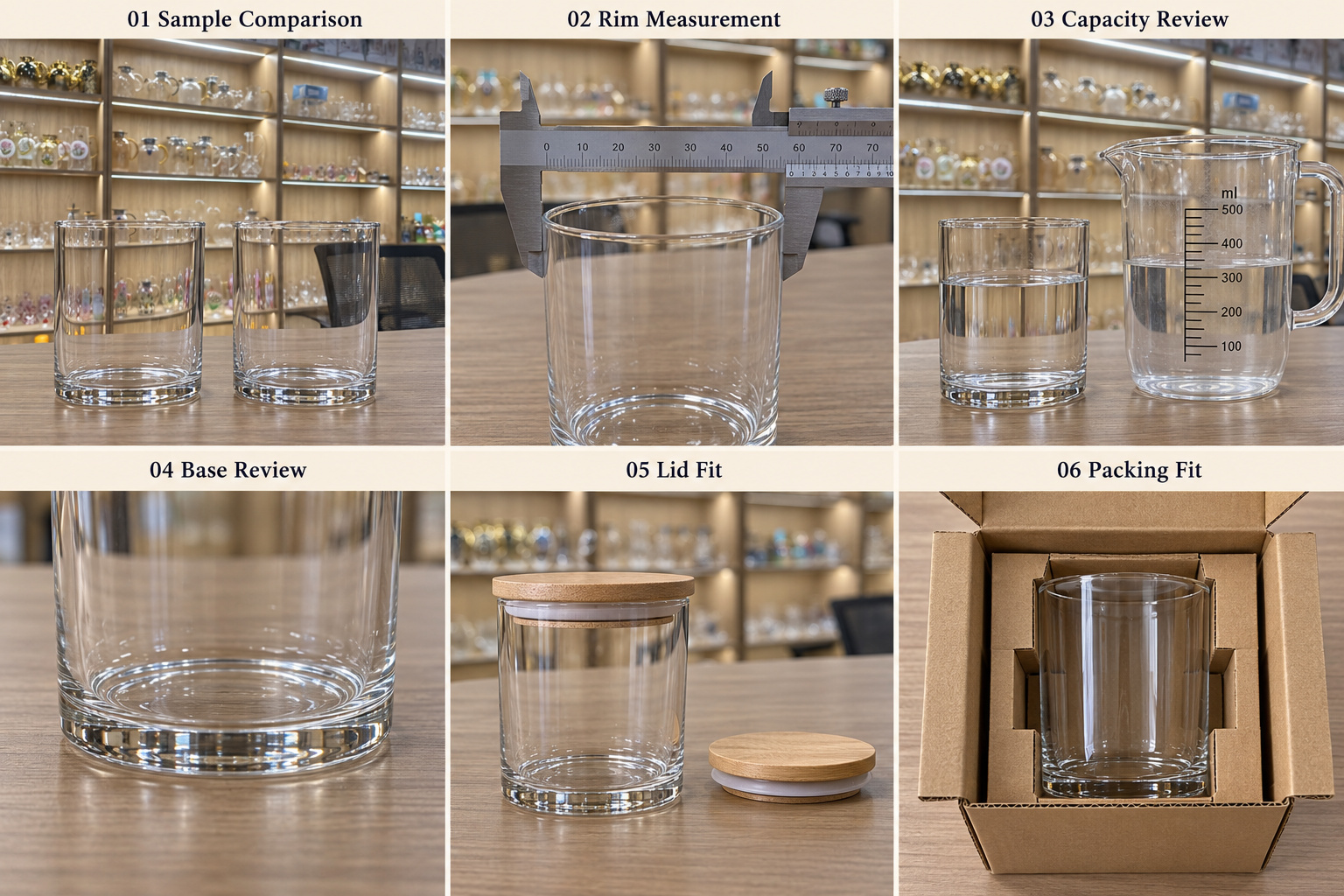
Trial samples allow buyers to compare the developed shape with the agreed drawing and reference. Review dimensions, capacity, weight, rim condition, base stability and overall appearance.
Check handles, lids and other components where applicable. Decoration areas and packing fit should also be assessed before the shape is finalised. A small profile change can affect print positioning or require a revised insert.
Record revisions clearly and identify the approved sample version. Our glass cup sample development page outlines how samples become a defined reference for production inspection.
 Request a Forming Feasibility Review
Share your preferred material, cup drawing or reference, quantity per model, decoration requirements and destination. Identify essential dimensions and any features that can be adjusted.
MOQ and lead time depend on the selected route, tooling, construction and sample revisions. After shape approval, applicable cooling, finishing, decoration and inspection stages still require confirmation.
Glasmero uses the agreed product details to coordinate quotation and production planning, including protective packaging and the required shipment schedule.