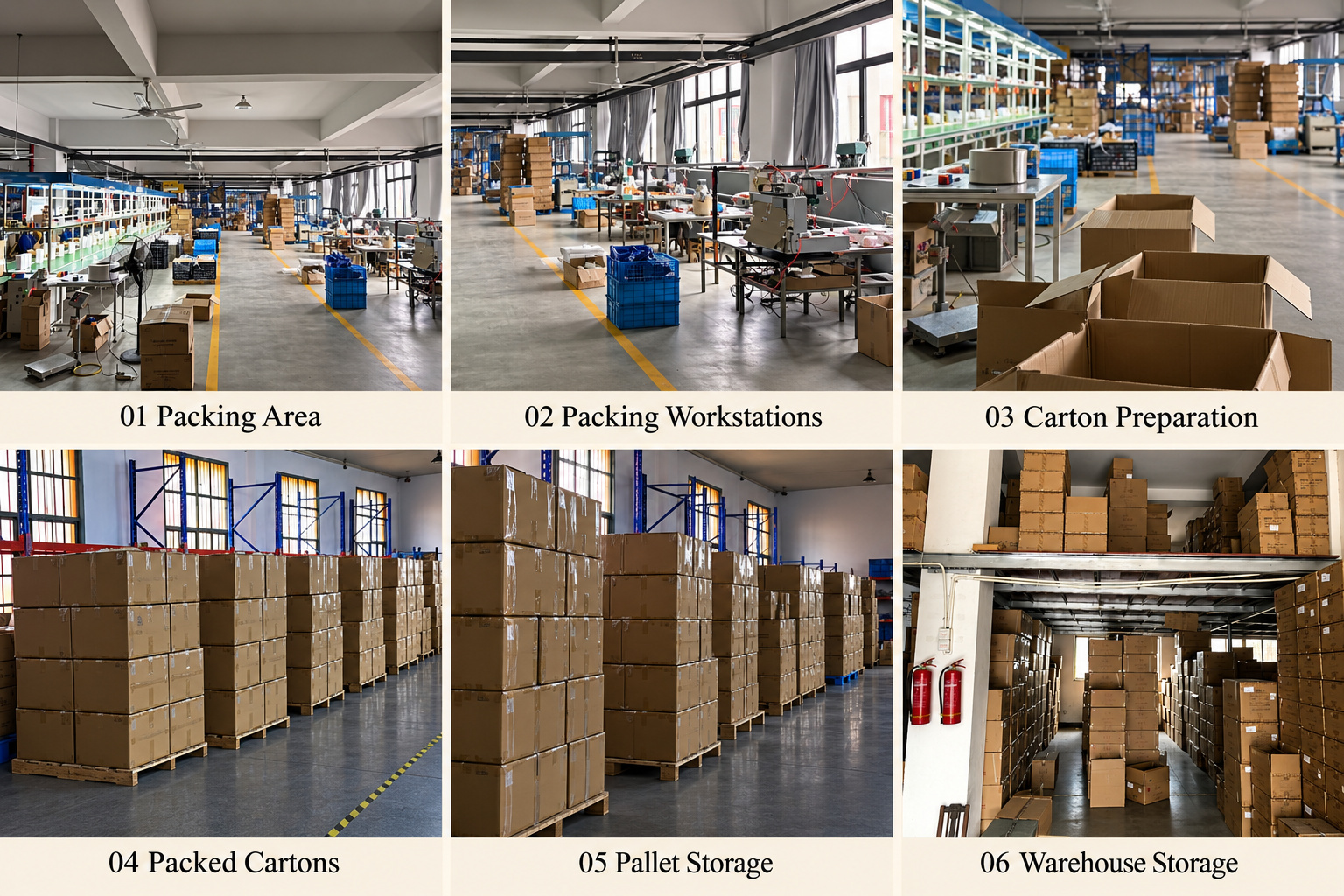


Manufacturing Support for Your Glass Cup Project
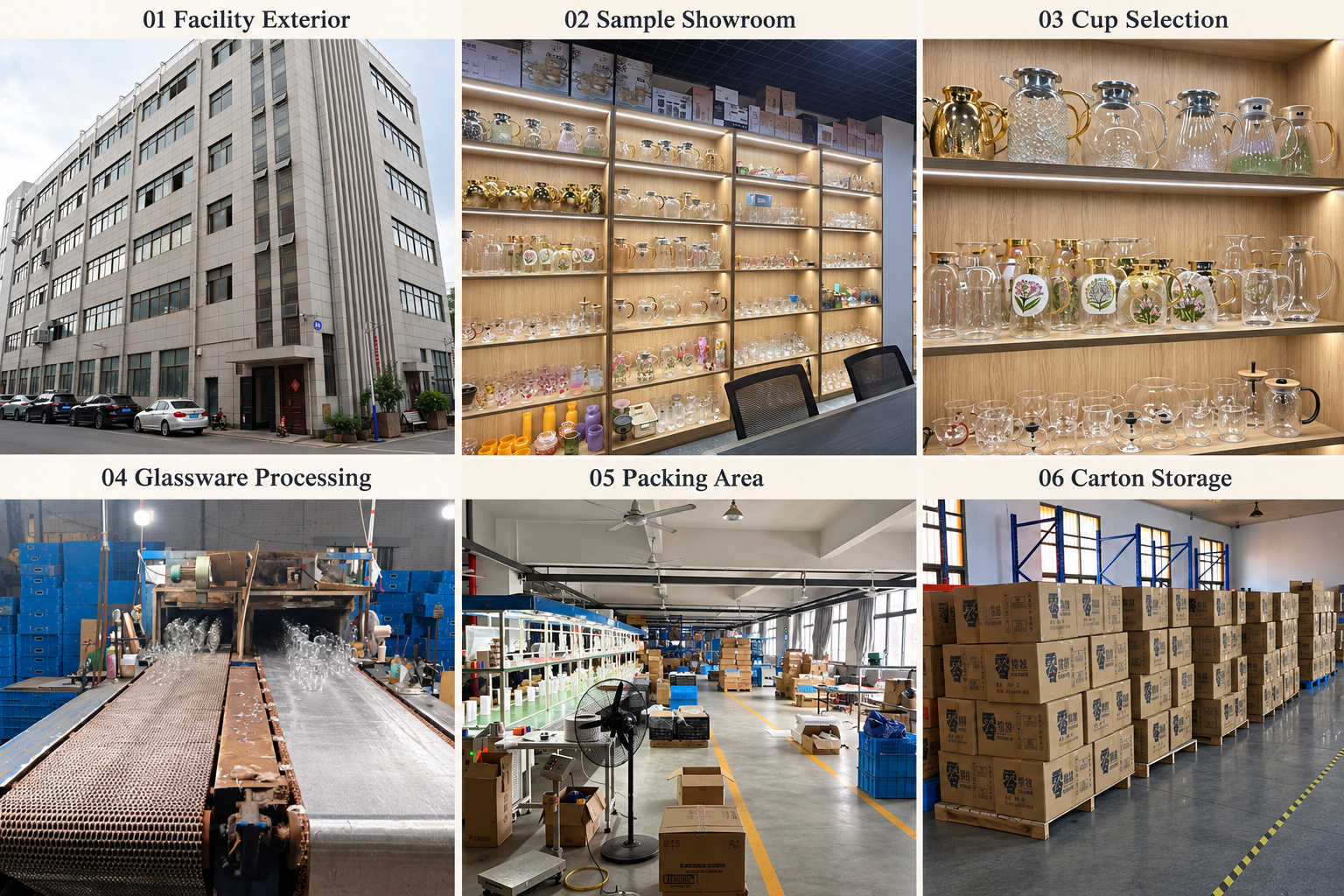 Glasmero coordinates glass cup manufacturing with product-specific manufacturing partners for importers, distributors, hospitality suppliers and private label brands. Our work connects model selection, specification review, sampling, decoration, inspection and export preparation.
The production route depends on the selected glass material, cup structure and order requirements. A molded drinking glass, a handled borosilicate mug and a stemmed wine glass do not necessarily follow the same forming or finishing sequence.
Before quotation, we review the proposed model, quantity, intended application and destination-market requirements. This establishes which production stages apply and what needs confirmation before an order proceeds.
Material Preparation and Production Route Selection
Material selection starts with the product specification. Soda-lime and borosilicate options are reviewed against available models, the proposed structure and the intended use.
For applicable furnace-based production, material preparation, melting and refining precede forming. Other products may use prepared glass tubing or different starting materials. We confirm the relevant route with the manufacturing partner rather than presenting one process as suitable for every cup.
Glass composition alone does not establish thermal resistance, dishwasher suitability or microwave compatibility. Required performance, supporting documentation and any testing arrangements need separate confirmation. Our glass material options explain the information needed for this review.
Forming the Cup Body and Confirming Dimensions
Depending on the model, cup bodies may be pressed, blown or formed from glass tubing. The selected method affects achievable shapes, wall distribution, molded details and tooling requirements.
Existing models provide an established starting point. A new profile may require drawings, tooling assessment and trial samples before production conditions can be confirmed.
During specification review, we distinguish overall height, opening diameter, base dimensions, weight and capacity. Capacity must have a defined measurement point, such as brimful volume or a stated filling level. Agreed tolerances provide a practical reference for evaluating production pieces.
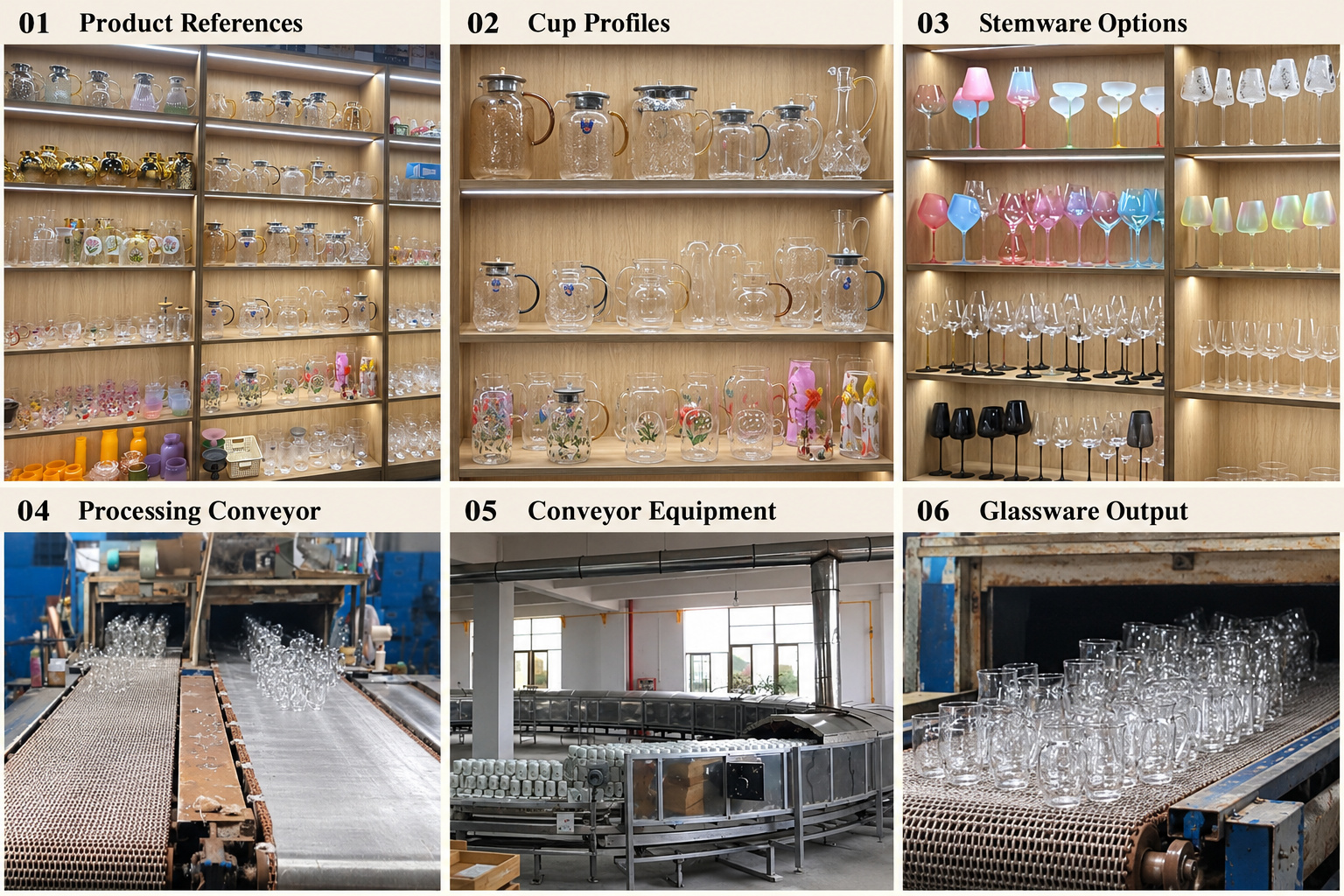 Cooling, Rim Finishing and Component Work
Controlled cooling and annealing are relevant to relieving stresses introduced during applicable forming operations. The required treatment depends on the product and manufacturing route.
Rim finishing addresses the drinking edge and its consistency. Inspection focuses on visible chips, sharp edges and irregularities against agreed acceptance criteria.
Handled mugs, stemmed glasses and double-wall products require additional attention to their particular construction. Handle attachment, stem alignment or wall joining should be evaluated where applicable. Separately supplied lids and straws also need fit checks against the approved cup model. These operations are confirmed for the selected product rather than assumed across the range.
Decoration and Production Sample Approval
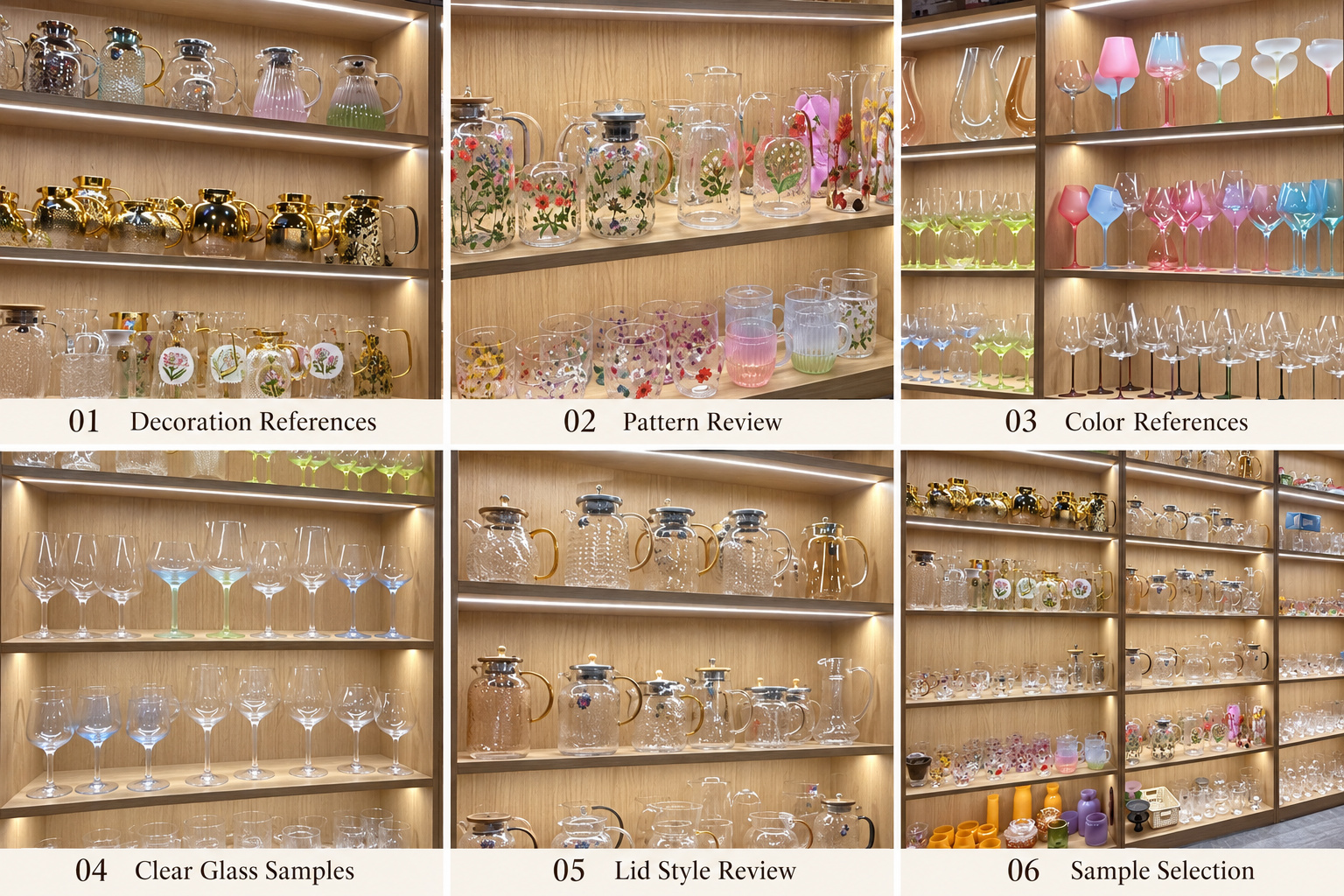
Logo printing, decals and available surface effects are reviewed against the cup geometry and requested design. Curved walls, handles and textured surfaces can restrict decoration areas or affect positioning.
Artwork preparation should define print size, location, colours and orientation. A digital layout establishes the proposal, while a physical decorated sample provides a clearer reference for appearance.
Before production release, the approved cup, decoration and packaging references should agree with the order specification. Changes after approval may require further sampling or schedule adjustments. See our glass decoration and printing page for the details that influence this stage.
 Inspection Against the Approved Order Reference
Inspection requirements should be agreed before production. Relevant checks include dimensions, capacity, appearance, rim condition, base stability, decoration placement and accessory fit.
Acceptance criteria should describe the defects being assessed and the sampling arrangements. A general statement such as “strict quality control” does not replace a defined inspection scope.
Where requested, third-party inspection arrangements can be reviewed with the manufacturing partner before shipment. Any functional or laboratory testing requires its own agreed method and scope. Our glass cup quality inspection page outlines the checkpoints buyers can discuss.
Protective Packing and Export Preparation
Packing must suit the approved cup shape and order configuration. Handles, stems, lids and straws can require separate support or compartments. Branded boxes and carton dividers should be checked with actual samples before the packing arrangement is approved.
Before dispatch, confirm carton quantities, shipping marks, measurements, weights and required documents. Production timing depends on model availability, tooling, decoration, packaging preparation and the agreed approval schedule.
Send your cup reference, specifications, quantity and delivery requirements so Glasmero can coordinate a suitable production and quotation review.