


Choose the Sample That Answers Your Purchasing Questions
Glasmero supports importers, distributors, hospitality suppliers and brand owners arranging glass cup samples before order confirmation. We coordinate with product-specific manufacturing partners to establish what the sample needs to demonstrate.
An existing product sample helps assess a model. A decorated sample shows the proposed logo result. A new-tooling trial addresses shape and production feasibility. A packed sample checks the complete product arrangement. Identify the decisions you need to make so the sampling scope, cost and preparation schedule can be reviewed accurately.
Provide a Defined Sample Brief
Send the product link, reference photograph, drawing or physical reference together with the required capacity, material and key dimensions. State the intended use and any essential features, including handle clearance, stem proportions, double-wall construction or accessory compatibility.
For decoration, provide vector artwork, color references and placement dimensions. For packaging, identify the contents per box and the required brand presentation.
Mark which specifications are mandatory and where alternatives are acceptable. If an exact model is unavailable, any proposed substitute should be identified before the sample is prepared.
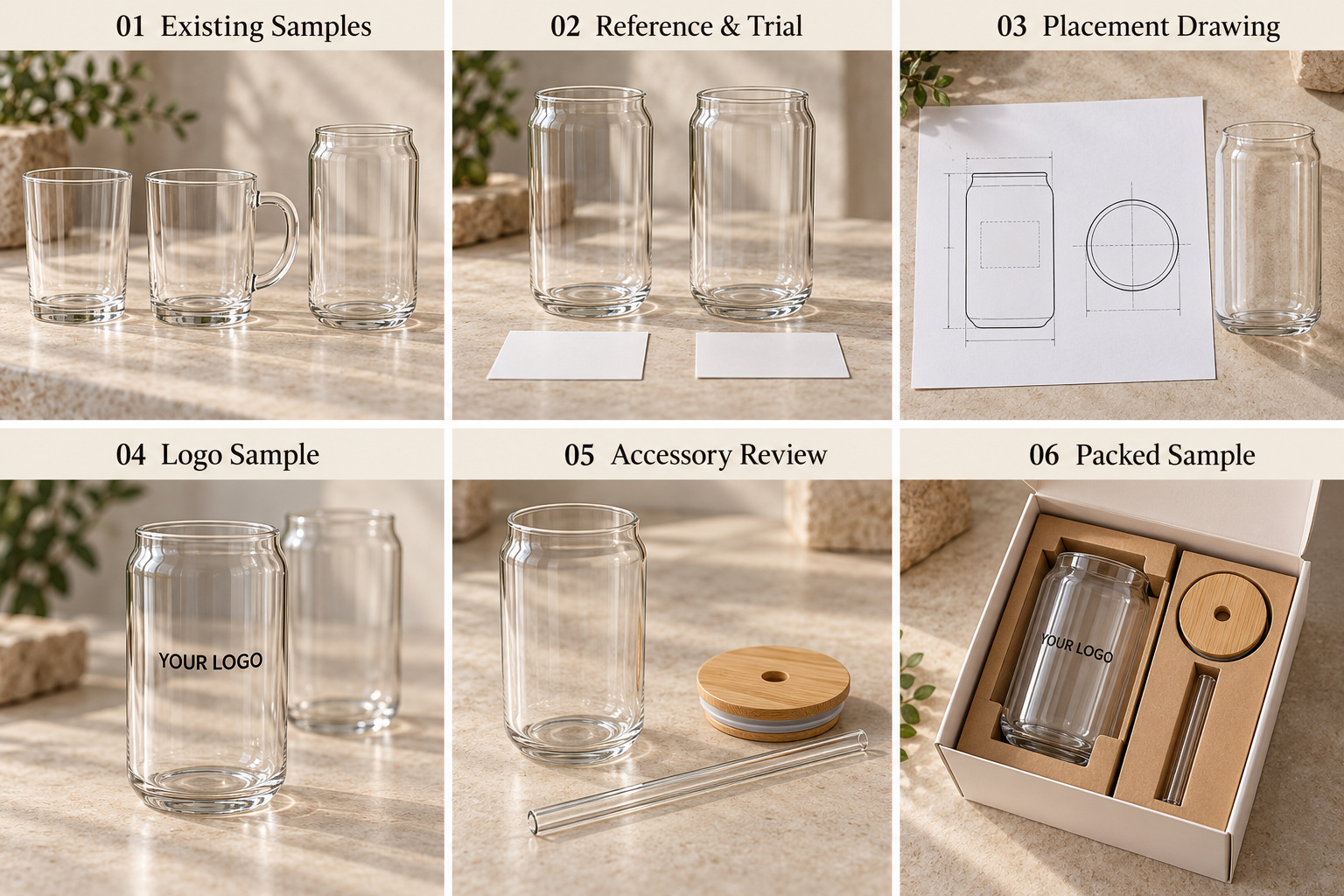 Review Existing Models and New-Tooling Trials Separately
Existing samples can help buyers assess proportions, handling and basic specifications. Confirm whether the supplied sample represents the proposed production material, finish and construction.
New shapes require a separate feasibility and tooling review. Drawings and reference pieces are assessed with suitable manufacturing partners before trial arrangements are confirmed. Our custom glass mold development review establishes the development scope and approval stages.
An early trial may require dimensional or appearance adjustments. Record these revisions against the relevant drawing version rather than approving a general photograph without a defined specification.
Check Decoration and Complete Product Fit
A digital layout communicates the proposed artwork position. A physical sample shows its appearance on the chosen cup, including contrast, scale and visible detail.
Review logo printing together with the actual cup color and surface. Where serving or cleaning performance matters, agree the required verification separately; visual approval does not establish durability.
Check lids and straws on the selected model. Packaging fit should also be reviewed using the complete proposed contents. Identify whether boxes are structural samples or use the final printed materials.
Record Revisions and the Approved Reference
Review the agreed dimensions, capacity measurement basis, rim condition, appearance and relevant component fit. Compare the sample against the purchasing specification and list any differences clearly.
Approval should identify the sample reference, drawing version, artwork and packaging arrangement. If a detail remains outstanding, record how it will be confirmed before production proceeds.
Keep the approved reference available for subsequent comparison. Production inspection should use agreed criteria and tolerances alongside the sample, since a reference cup alone cannot define every acceptance requirement.
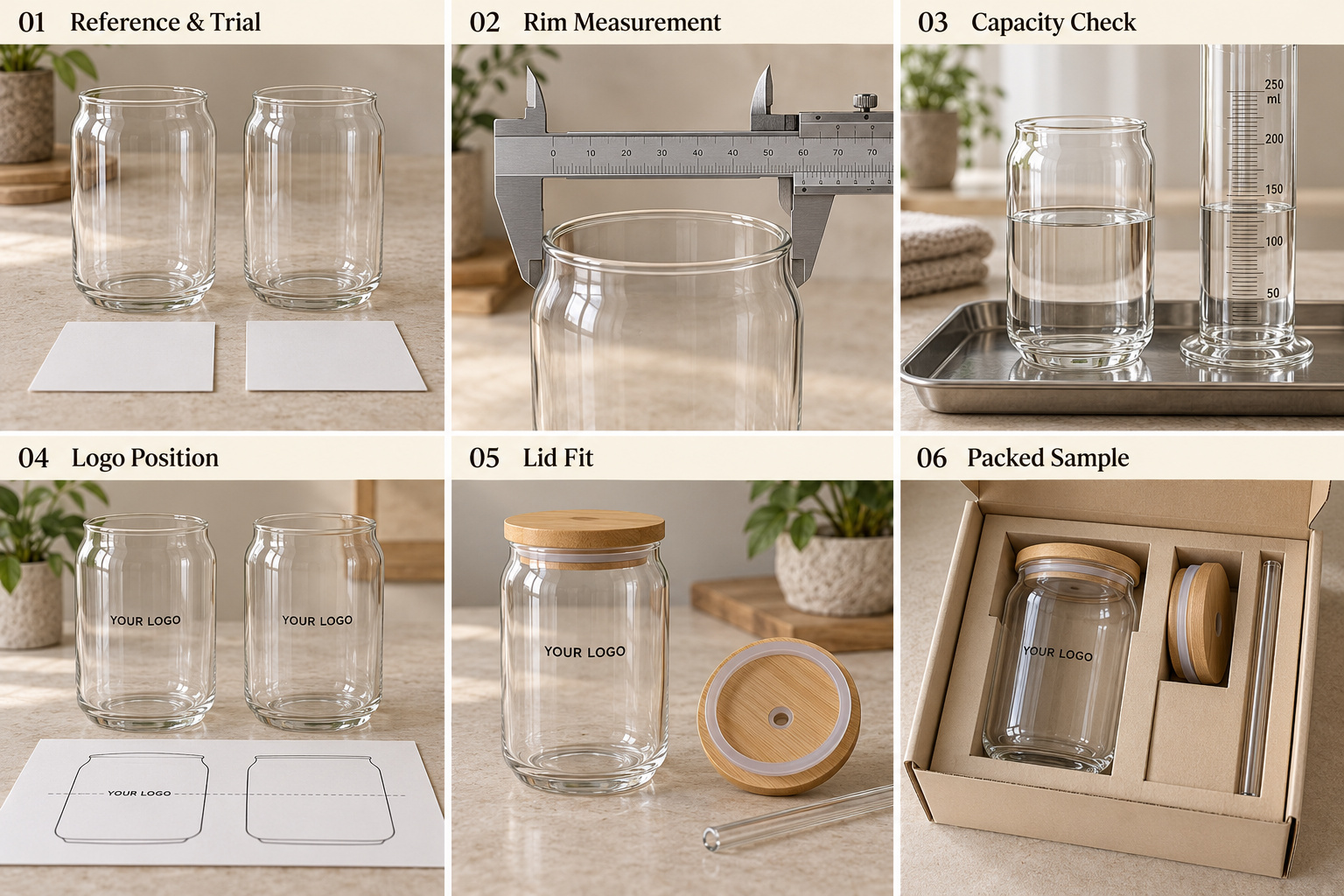 Confirm Sample Costs, Timing and Dispatch
Sample costs depend on the model, decoration, tooling and packaging work required. Confirm the number of pieces needed for internal review, testing or distribution to different locations.
Preparation time is assessed separately for existing samples, decorated samples and tooling trials. Revisions may require another sample round. Courier arrangements and destination details should be included when confirming dispatch costs.
Sample approval is one stage of the OEM order process. Bulk MOQ, production timing and shipment requirements still need confirmation against the final specification and order quantity.